
Last updated on March 1, 2026
61st Biennale di Venezia: In Minor Keys
Curator: Koyo Kouoh Curatorial team: Gabe Beckhurst Feijoo, Marie Helene Pereira, Rasha Salti, Siddhartha Mitter, Rory Tsapayi
Art as Memory. Intellect as a Form of Resistance
Venice, January 2026. As the new edition of the Venice Biennale opens in the city this week, one of the world’s most enduring cultural institutions once again asserts its relevance at a moment when other languages increasingly fail.
When politics turns into noise and culture into a display window, only a few spaces remain where thought still carries weight.
The Venice Biennale is one of them. Here, art has never been merely a matter of aesthetics. From its very beginning, it has functioned as a gesture of its time, a form of memory, and a way of speaking about the world precisely when conventional narratives lose their authority.
A Cultural Project of the State
Founded in 1895, the Venice Biennale emerged at a time when Europe still believed in progress, national ideas and the cultural mission of art. It was neither a private initiative nor an avant-garde experiment.
The Biennale was conceived as a state-supported cultural project of Italy, designed to establish Venice as a European cultural capital, integrate art into international diplomacy, and demonstrate that culture itself could serve as a form of political presence.
From the outset, the Biennale existed at the intersection of art, power and history — and never attempted to conceal that intersection.
The Biennale as a Gateway to History
Throughout the twentieth century, the Venice Biennale became something exhibitions rarely are: a gateway into history.
It was here that artists whose names now define the canon — Pablo Picasso, Wassily Kandinsky, Mark Rothko, Louise Bourgeois, Anselm Kiefer — gained international recognition. For many of them, the Biennale marked the passage from professional recognition to global cultural consciousness, from contemporaneity into history.
Politics, War and Memory
After the Second World War, the Biennale was permanently transformed. It ceased to be merely an exhibition and became a mirror of Europe’s political trauma.
Across decades, it reflected the logic of the Cold War, articulated colonial and post-colonial conflicts, and confronted questions of guilt, responsibility, identity and memory. National pavilions evolved into cultural self-portraits of states — sometimes candid, sometimes uneasy, sometimes conspicuously silent.
The Curator as an Intellectual Author
In the twenty-first century, the curator has become the central figure of the Biennale. Today, the curator does not simply select artists.
They construct an intellectual script for the age — determining what is considered important, whose voices are heard, and which narratives are permitted to enter public space.
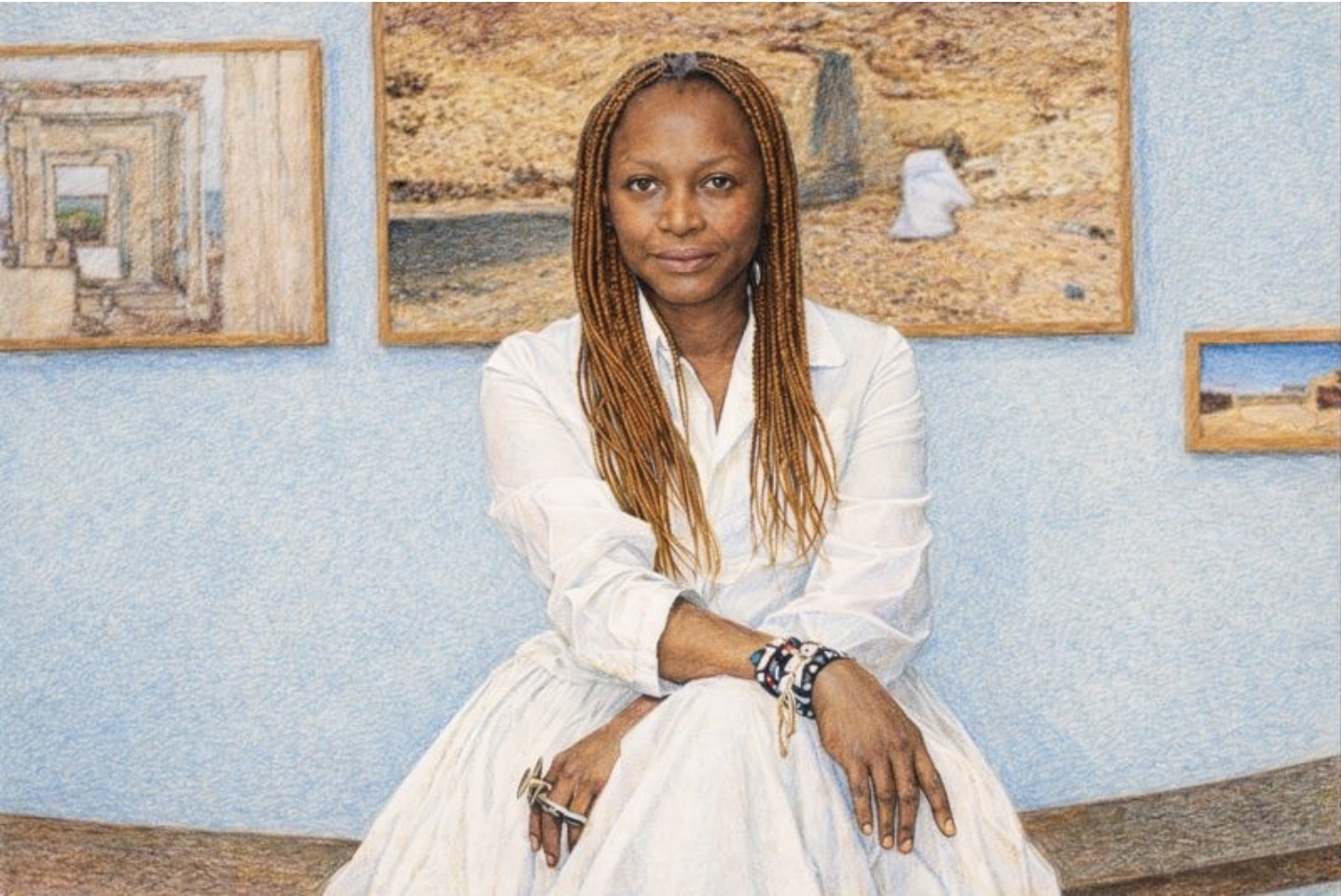
Koyo Kouoh and the 2026 Biennale
Koyo Kouoh stands as one of the most significant curatorial figures of our time. Her career spans decades of engagement with African and global art, marginalised histories, and themes of memory, silence and responsibility.
The theme of the 2026 Biennale, In Minor Keys, consciously rejects spectacle and visual excess. It embraces a minor tonality — attentive, restrained, inward — an art that does not shout, but holds meaning.
Following Kouoh’s death, the exhibition is being realised strictly in accordance with her original vision — a rare and telling gesture of respect not for a name, but for thought itself.
Why the Venice Biennale Still Matters
In a world where intellect is increasingly replaced by recognisability, thought by speed of reaction, and talent by visual impact, the Venice Biennale remains a space where instinct gives way to thinking, branding to language, and noise to understanding.
This commitment is already visible in the artists announced for the 2026 edition: Yto Barrada (France), Sung Tieu and Henrike Naumann (Germany), and Lubaina Himid representing the United Kingdom — a constellation of practices deeply engaged with memory, history and political responsibility.
This is what makes the Biennale significant not only for art, but for the political and intellectual history of Europe.
History does not remember those who were convenient. It returns to those who were precise.
If talented artists, thinkers and intellectuals are no longer advanced, supported or heard, humanity risks losing not style or form, but the very capacity to understand itself.
The Venice Biennale endures as a reminder that the planet’s intellect does not require applause — only a space in which it is allowed to exist.
Follow MERUTTA across platforms for extended analysis, video essays, and cultural briefings:
- Medium — @MERUTTA
- Instagram — @merutta.official
- TikTok — @merutta_official
- YouTube — @terraamoris