
SIMONE SIGNORET: A STUDY IN CINEMATIC INTELLIGENCE AND TRAGIC MODERNITY
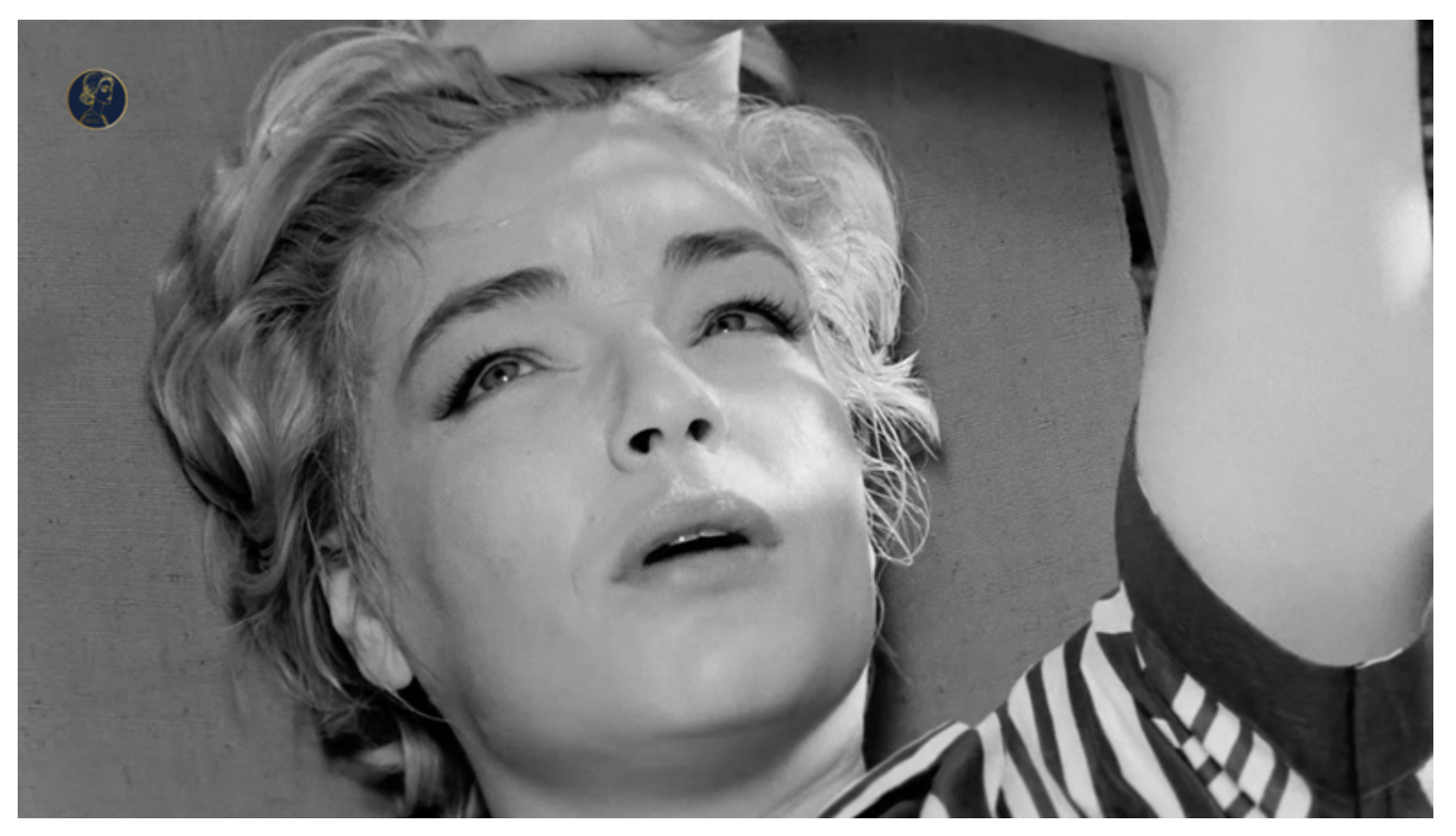
Among the great figures of European cinema in the twentieth century, there are those whose presence resists simple classification: they cannot be adequately described in the categories of “actress,” “star,” or even “icon of an era.” These are personalities whose existence in cinema becomes something more than a profession – a phenomenon. Simone Signoret belongs to that rare constellation of artists whose roles are not merely a part of film history, but a self-contained artistic territory where human experience and artistic truth meet so organically that the boundary between performance and being disappears.
Born as Simone Kaminker, the daughter of André Kaminker – a translator and intellectual deeply involved in the theatrical life of pre-war France – she grew up in an environment where language, stage and dramatic structure were not abstractions but a living medium. It is no coincidence that she would later write that theatre was “the first language through which I understood the world.” Thanks to her father, she entered art not as a beginner but as someone already shaped by literature, history and the cultural discipline of the French tradition.
Her appearance in Jacques Becker’s Casque d’Or (1952) was a revelation. Becker said of her: “Elle portait sur son visage une histoire que je n’avais pas besoin d’écrire” – she carried on her face a story I did not need to write. In this role she does not simply create a character; she becomes the point at which human experience takes form. The camera does not register acting, it registers truth – and in Signoret’s case truth always outweighs the plot. From this film begins what critics would later describe as a specifically French realism of inner tension: an acting manner in which emotion arises not from expression but from sheer existence.
With Marcel Carné in Thérèse Raquin (1953), she moves into another dimension of tragedy – not external but moral. Georges Sadoul wrote: “Signoret impose une vérité sans protection” – Signoret brings a truth stripped of protection. This is the essence of her method. She does not construct a barrier between herself and the character; the role becomes a way to articulate what human beings usually
conceal. She does not decorate her work with colour or mask; instead there is a precise structure of pain. Her dramatic roles therefore look less like interpretations than like documentary fragments of inner life.
Henri-Georges Clouzot in Les Diaboliques (1955) saw in her not merely an actress, but an instrument of cinematic silence. He remarked: “Elle savait écouter la caméra” – she knew how to listen to the camera. In her performance there are no gestures that demand attention; attention comes on its own, because she becomes the centre of meaning in the frame. Her tragic stillness in Clouzot’s film is not the absence of movement, but the presence of depth, which is more unsettling than overt emotional display.
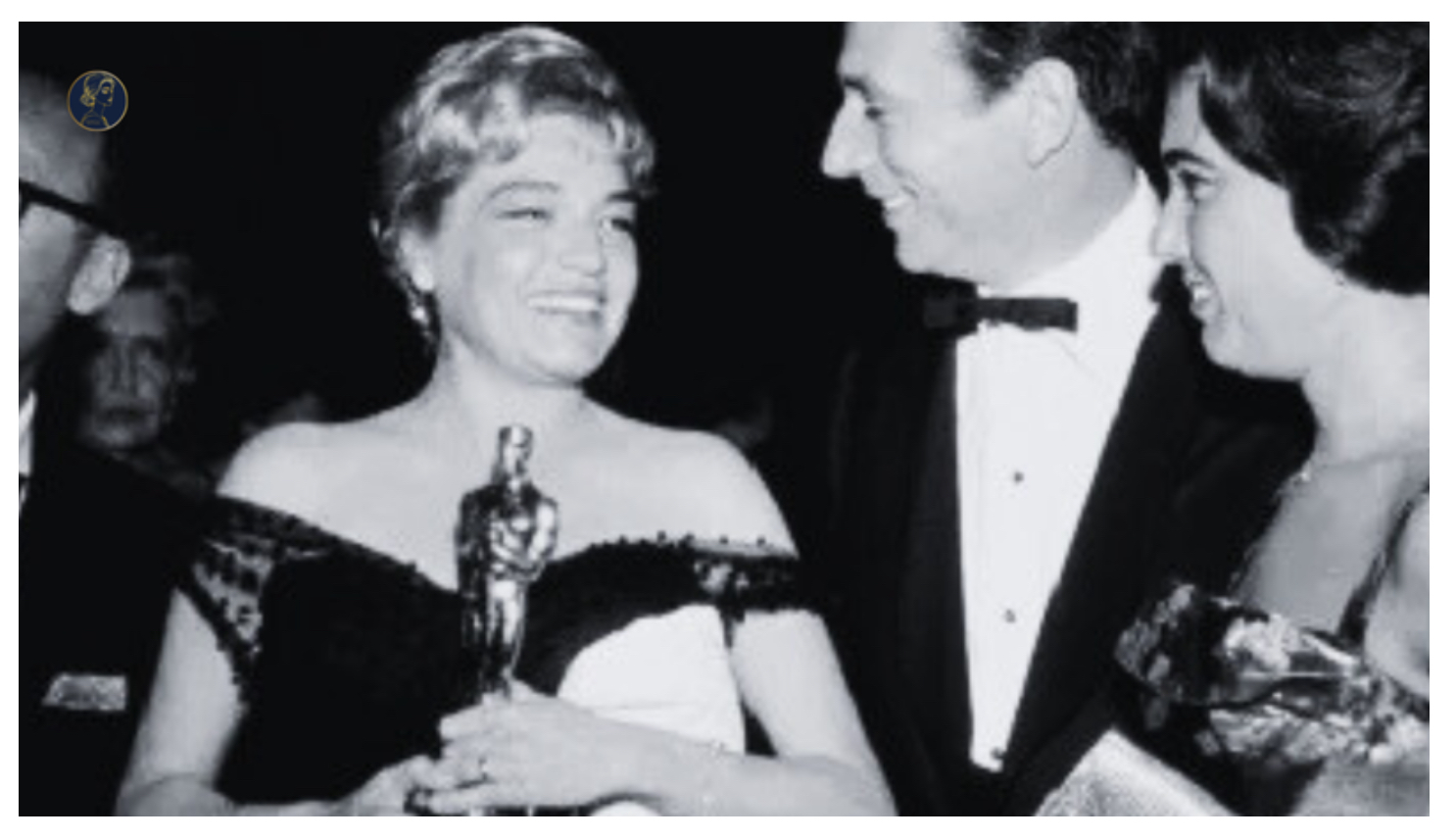
International recognition came with Room at the Top (1958), where she created the character of Alice Aisgill – one of the most piercing and psychologically truthful female portraits in British cinema. Her Oscar was not simply an award for an outstanding performance; it was the recognition of a new model of screen acting – European, mature, intellectually honest, tragically contemporary. Signoret demonstrated that a female role could be profoundly intellectual, that maturity is not a loss but a gain in depth, and that the dramaturgy of feeling is not a scream but a slow process of psychological crystallisation. Critics noted that she did not play a “ruined woman,” but a woman who refuses to betray her own heart, and this formulation captures her artistic nature with great precision.
In La Veuve Couderc (1971) by Pierre Granier-Deferre, she reaches a summit of her late work. The figure of Tati Couderc is not just a character but an inquiry into human heaviness, solitude and dignity. Granier-Deferre said: “Signoret habitait ses silences comme d’autres habitent des palais” – Signoret inhabited her silences as others inhabit palaces. Her scenes with Alain Delon have become an exemplary instance of rare actorly reciprocity. Delon would later admit that working with her was a form of happiness because she compelled her partner to be better. This is not a compliment; it is a description of her method. She did not construct a role as an autonomous form; she built an architecture of space in which the partner became a co-author, and the scene – a structure of mutual existence.
Her extraordinary gift for what might be called “transformation without metamorphosis” is one of her most significant achievements. She did not radically alter her physicality, did not seek refuge in the grotesque, did not hunt for external effect. Signoret’s strength lay in her ability to carry into the role her own understanding of human complexity in an organic way. She did not put on a mask – she allowed herself to be as deep as the role demanded. This was not a matter of intuition alone; it was the result of intellectual labour.
Her notebooks and diaries are, in this sense, a rare document of the actor’s craft. They show that she analysed roles not primarily through emotion but through observation, context and the historical structure of the character. She examined her films the way a literary scholar studies a text: the scene as syntax, the pause as punctuation, the partner as co-author. Signoret’s diaries are not confession but a professional laboratory which makes it clear that her acting was not mere inspiration, but a high form of reflective work.
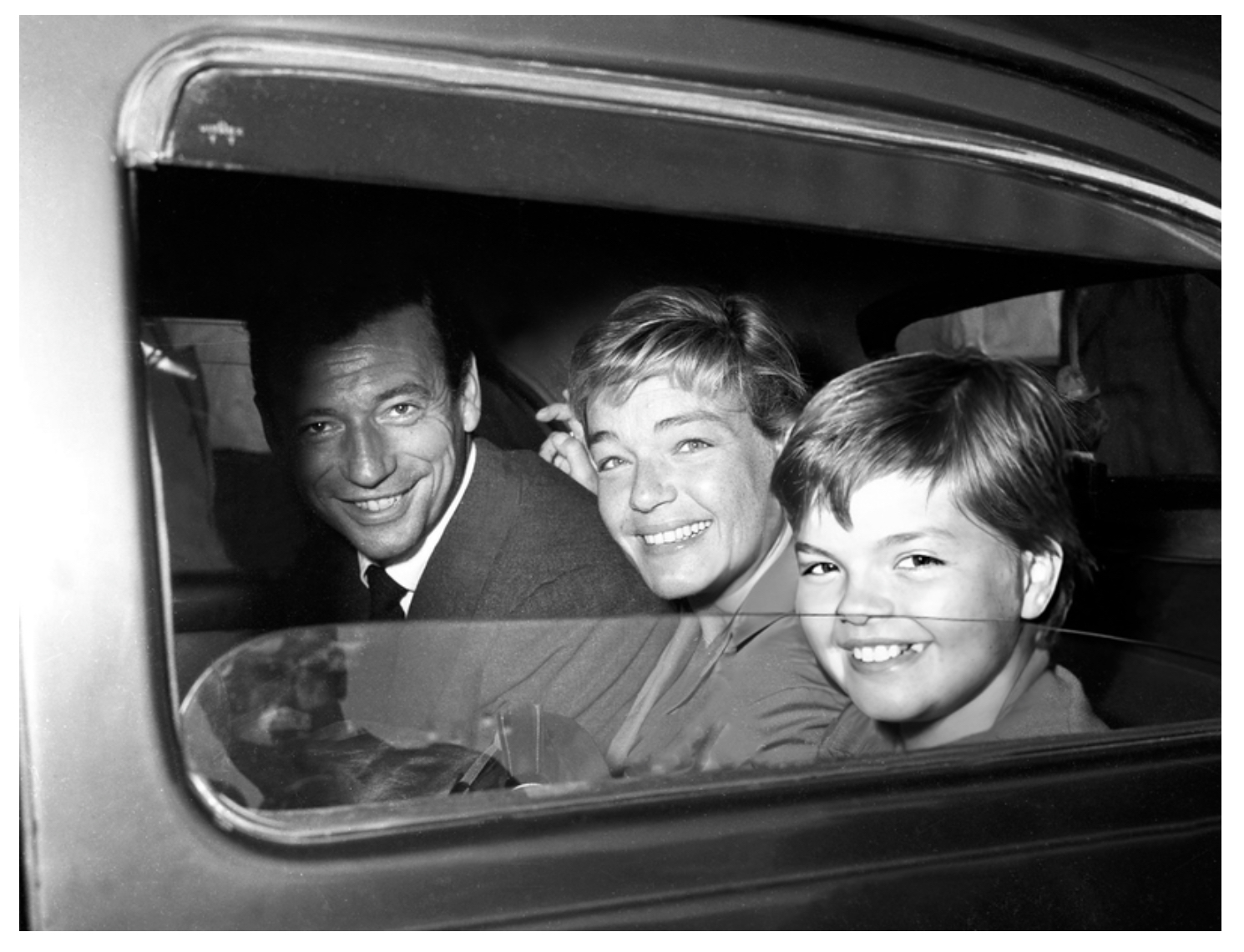
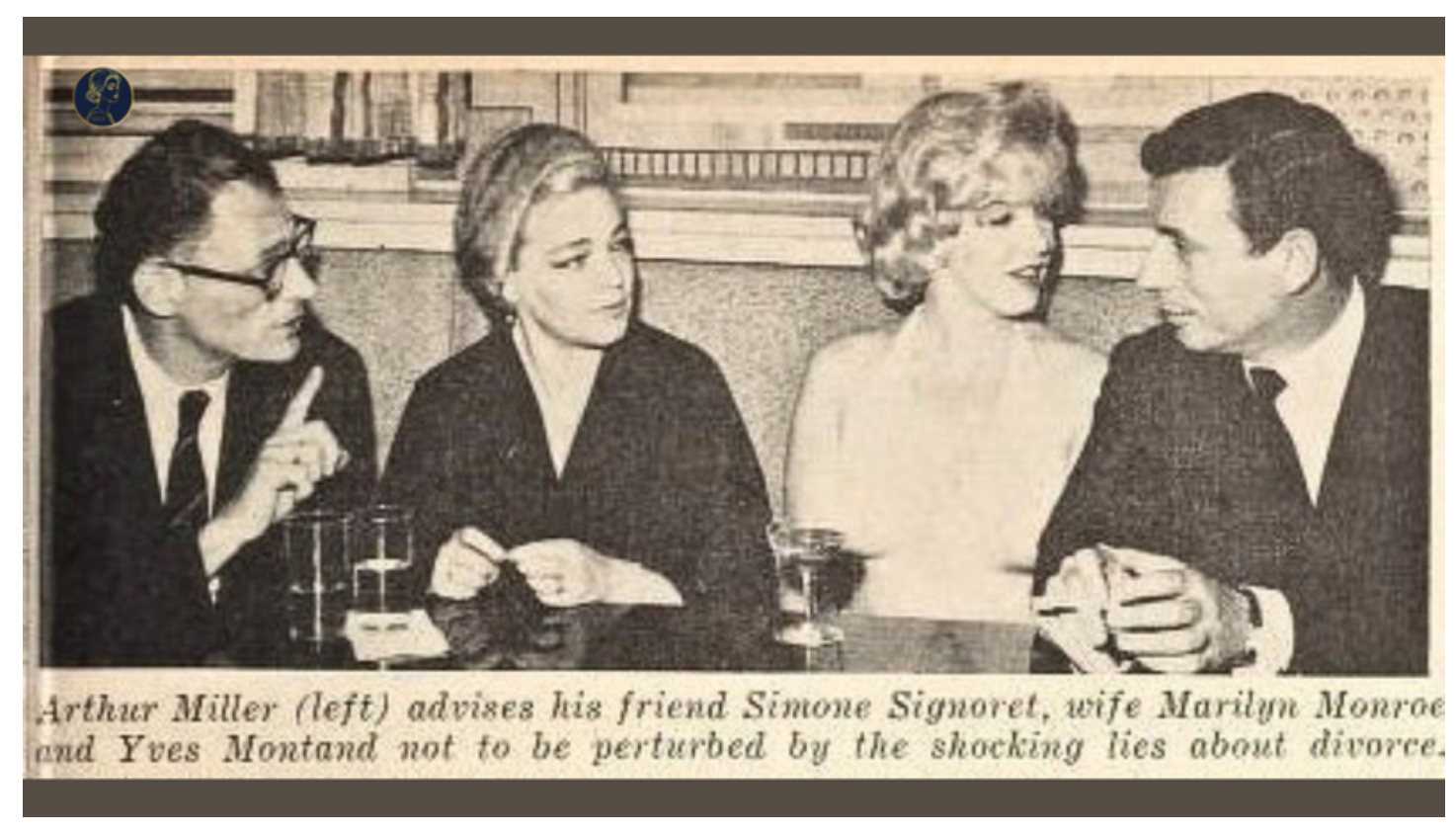
Her private life is not simply biographical material; it is part of her tragedy. Her creative union with director Yves Allégret was one of intellectual equality, artistic dialogue and rare compatibility between two strong personalities. The subsequent move into a relationship with Yves Montand marked a turning point that many researchers interpret as tragic. Yet from a critical and scholarly perspective, this episode is not reducible to moralising. It reveals a painful transition: from a partnership based on shared artistic and intellectual ground to a bond in which she was deeper, stronger and more complex than the space her partner could offer. Montand was a man of outward temperament, stage energy and instinct; Signoret was a figure of inner fire, structural thinking and moral weight. Their mismatch became a source of profound pain, but that pain never turned into public spectacle.
One of the most enigmatic moments of her life remains the telephone call she made to Alain Delon during Montand’s American period and his relationship with Marilyn Monroe. In one of his late interviews, Alain Delon confirmed that this phone call had indeed taken place and that everything Simone Signoret told him that night would die with him. He allowed himself only one clarification: yes, she was in pain. It is no coincidence that this confession was addressed not to her husband, not to close friends, not to colleagues, but to a younger partner with whom she had shared only a few films. Signoret seemed to intuit that Delon would carry her secret to the grave, without ever turning it into anecdote or public drama. The fact that he broke his silence only to acknowledge the existence of the call – and not its content – has become part of her legend: even at the moment of greatest vulnerability she remained protected not by public sympathy, but by that rare form of respect in which another human being refuses to betray what was entrusted to him.
In her later roles – in films such as La Vie devant soi and L’Étoile du Nord – she reveals not decline but an expansion of depth. Her heroines cease to be “tragic women” in the conventional sense and become figures of moral knowledge. She no longer merely performs tragedy; she becomes one of its forms. This is an exceedingly rare phenomenon in world cinema: an actress who turns lived experience into a stable artistic structure.
The phenomenon of Simone Signoret thus cannot be reduced either to the sum of her roles or to the linear narrative of a biography. It is an intersection of culture, intellect, fate, discipline and a unique capacity to turn experience into form. She became for European cinema what Sarah Bernhardt had been for the theatre of the nineteenth century and Greta Garbo for the classical American screen: an example of how a personality can elevate art itself. In her work there are no decorations; there is human truth, the weight of destiny, and the rare ability to transform pain into an enduring artistic presence.
SELECTED FILMOGRAPHY & AWARDS — SIMONE SIGNORET ▪ CASQUE D’OR (1952)
Role: Marie
Director: Jacques Becker
Award Recognition:
– Marked Signoret’s artistic breakthrough; widely cited by French critics as the definitive proof of her dramatic maturity.
Becker remarked: “Elle portait sur son visage une histoire que je n’avais pas besoin d’écrire.”
▪ THÉRÈSE RAQUIN (1953) Role: Thérèse
Director: Marcel Carné Award Recognition:
– Praised by Georges Sadoul for “a truth stripped of protection”.
– Established Signoret as one of the central tragic actresses of postwar French cinema.
▪ LES DIABOLIQUES (1955) Role: Nicole Horner
Director: Henri-Georges Clouzot Award Recognition:
– Considered one of her greatest psychological roles. Clouzot said: “Elle savait écouter la caméra.”
▪ ROOM AT THE TOP (1958) Role: Alice Aisgill
Director: Jack Clayton Awards:
– Academy Award (Oscar), Best Actress, 1959 – BAFTA Award, Best Foreign Actress
– Cannes Film Festival, Best Actress Nominee Importance:
This role redefined female screen acting as intellectually and emotionally modern.
▪ LES SORCIÈRES DE SALEM — “THE CRUCIBLE / THE SALEM WITCHES” (1957)
Role: Elizabeth Proctor
Director: Raymond Rouleau
Award Recognition:
– BAFTA Best Foreign Actress (1958)
– Considered by critics one of the most morally austere, restrained and emotionally precise roles of her early career.
– Script adapted by Jean-Paul Sartre, adding philosophical weight to her performance.
▪ LA VEUVE COUDERC — “THE WIDOW COUDERC” (1971) Role: TATI COUDERC
Director: Pierre Granier-Deferre
Importance:
– A summit of her late work.
– Famous screen partnership with Alain Delon, who said:
“Elle obligeait l’autre acteur à être meilleur.”
– A role considered by French critics as one of the most important portrayals of female solitude and internal dignity in European cinema.
▪ LA VIE DEVANT SOI (1977) Role: Madame Rosa
Director: Moshé Mizrahi Awards:
– César Award, Best Actress (1978)
– One of her final and most spiritually profound roles.
▪ L’ÉTOILE DU NORD (1982) Role: Édith
Director: Pierre Granier-Deferre Awards: – César Award Nominee
– Regarded as a culmination of her late-career psychological subtlety.
____
Simone Signoret’s artistic stature is defined not by the quantity but by the density of her major roles. Her filmography forms a continuous dialogue with European cinematic modernism: from the poetic realism of Becker and Carné, through the psychological severity of Clouzot, to the moral depth of Clayton and the late humanistic gravitas of Granier-Deferre. Her awards — Oscar, BAFTA, César — mark milestones not only in her biography but in the evolution of screen acting itself.
Comments are closed.