
Last updated on March 1, 2026
SERGE GAINSBOURG: THE PRECISION OF DISCOMFORT
Je suis venu te dire que je m’en vais. Serge Gainsbourg, 1968
Serge Gainsbourg is the most complex, contradictory, and genuinely outstanding figure of twentieth-century French culture. He is often described as a singer or a provocateur. In truth, he was, above all, a poet — one who deliberately chose the form of song as the most living and dangerous vessel for poetry.
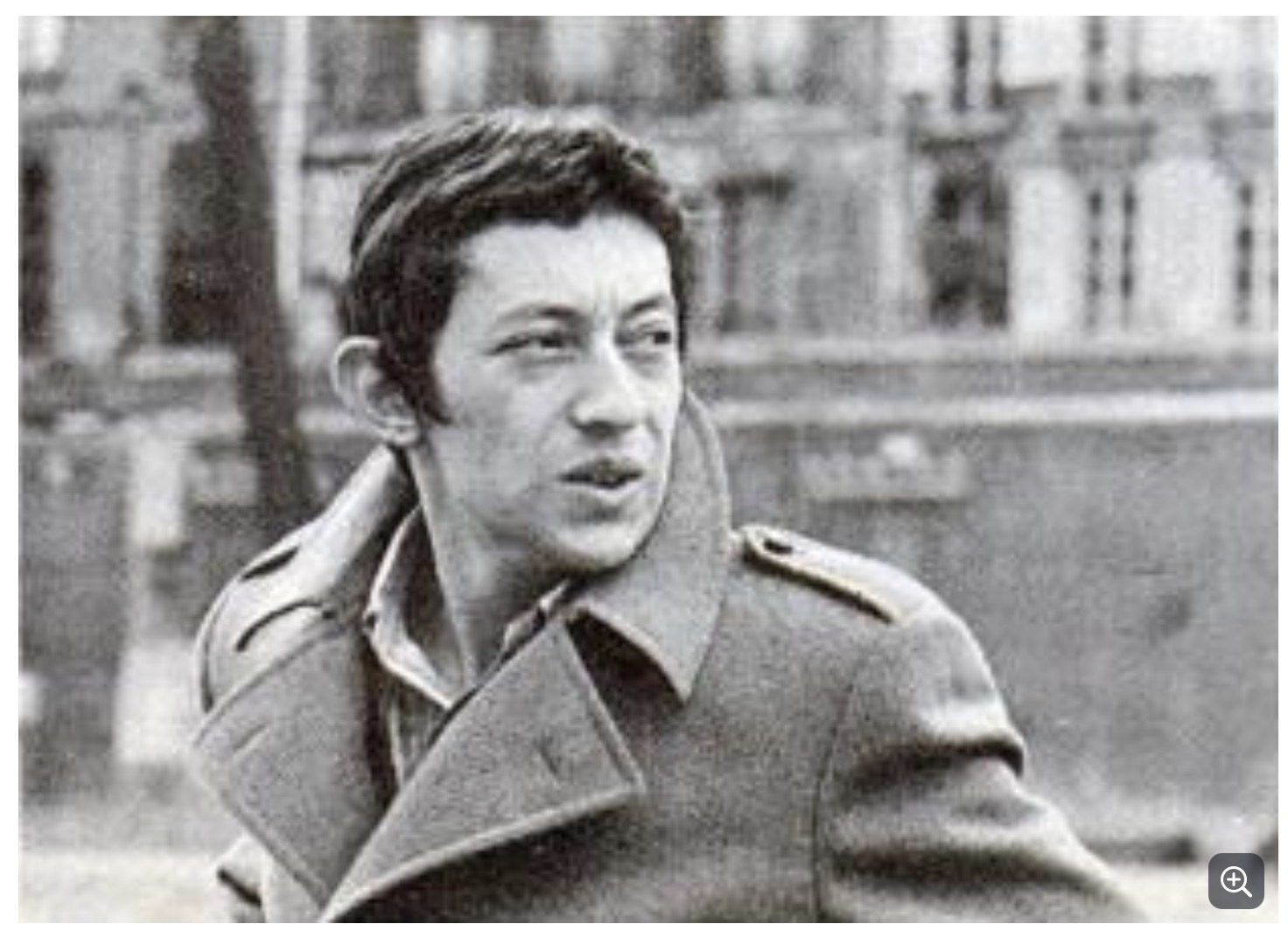
Born in Paris in 1928 to a family of Jewish émigrés, Gainsbourg was raised on classical music, literature, and painting. He dreamed of becoming a visual artist and for a long time considered himself a failure. That enduring sense of being an outsider — awkward, unattractive, ill-fitting — became the driving force of his poetics.
He never sought to be agreeable.
He sought to be precise.
In France, he stands alongside the greatest poets of his era.
To speak plainly and without mythologising: Gainsbourg is one of the greatest poets of the post-war era, though not an academic one — a disruptive poet.
Gainsbourg worked with homonyms, alliteration, wordplay, double and triple meanings, phonetic traps. His texts are still studied by French scholars as literary objects, not as popular music.
He consciously drew from Baudelaire, Verlaine, Mallarmé, Apollinaire — and dared to do what academic poetry would not: to carry their techniques into popular culture without simplifying the language.
Yes, he wrote about the body, desire, incest, destruction, addiction. But this is not vulgarity — it is the continuation of the French libertine tradition. In Gainsbourg, eroticism is tragic, self-destructive, intellectual, almost metaphysical. He explores shame, guilt, desire, and power — not mere provocation.
He wrote about ageing, physical ugliness, jealousy, dependency, self-hatred — without any attempt to please the listener. This is an exceptionally rare form of honesty.
His texts are notoriously difficult to translate. They rely on sound, rhythm, hidden associations. In translation, meaning survives — but the venom disappears.
Serge Gainsbourg was not merely a provocateur, not a pop artist, not a cynic chasing shock. He was a poet of language, of desire, of self-destruction — a man who transformed his personal abyss into a form of art.
If greatness is measured by depth, risk, and intellectual integrity, he was extraordinary.
Follow MERUTTA across platforms for extended analysis, video essays, and cultural briefings:
- Medium — @MERUTTA
- Instagram — @merutta.official
- TikTok — @merutta_official
- YouTube — @terraamoris