
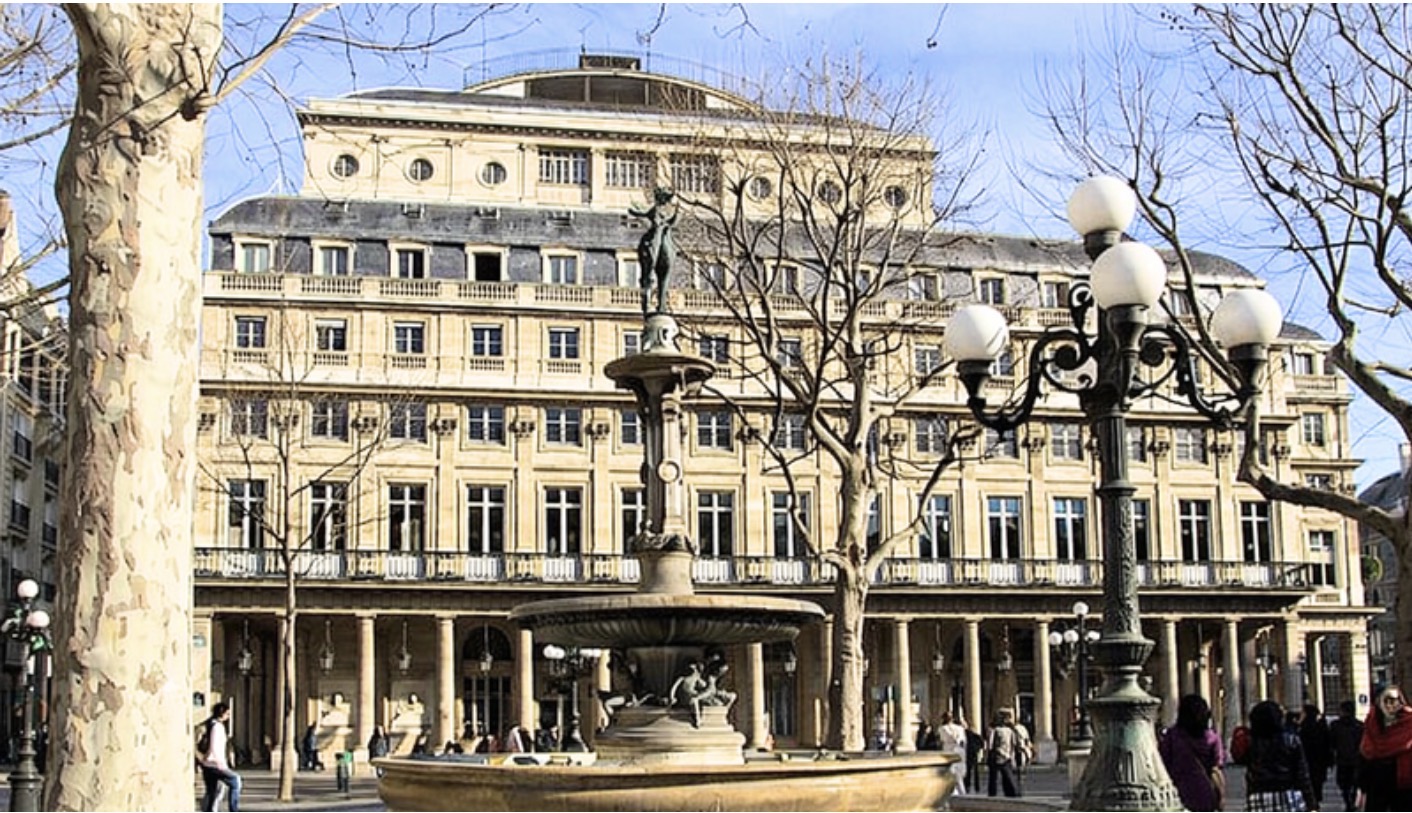
Parisian theatre in February 2026 rests not on the effect of novelty, but on recognisable artistic figures and long-established public trust. The repertoire functions precisely because the texts are supported by distinct directorial signatures and acting names long embedded in the theatrical landscape of France.
In the hors les murs season of the Comédie-Française, a decisive role continues to be played by directors of institutional stature — above all Éric Ruf and Clément Hervieu-Léger. Their engagement with the classical repertoire — Molière, Marivaux, and twentieth-century authors — is grounded not in radical reinterpretation, but in precise actorly intonation and textual rhythm. The productions feature performers whose very names serve as markers of quality for the Parisian audience: Denis Podalydès, Laurent Stocker, Elsa Lepoivre. Their presence shapes a specific form of expectation — the public attends not “a play”, but a particular ensemble.
On the stage of the Théâtre de la Porte Saint-Martin, where classical productions continue throughout February, direction is oriented towards formal clarity and actorly expressiveness. This is a theatre in which concept as manifesto is secondary to direct contact with the auditorium. The evening unfolds through the energy of the text and the audience’s response — laughter, pauses, recognition. Judging by auditorium occupancy and the extension of runs, such productions consistently attract an audience distant from theatrical avant-gardes, yet deeply invested in tradition.
Major mixed-genre stages, including the Théâtre du Châtelet, operate with a different category of director — most often practitioners of musical and physical theatre, for whom dramaturgy exists in dialogue with orchestra, choreography, and visual structure. Audience response here is of another order: not verbal reaction or laughter, but sustained applause, concentrated attention, and a willingness to follow form over narrative immediacy.
Particular attention must be given to the repertoires of small and mid-scale venues — Théâtre de l’Atelier, Théâtre Montparnasse, Lucernaire. These stages are home to directors of an authorial type, often combining staging and dramaturgy, and to actors well known to regular audiences, even if not always media figures. February’s intimate productions play to steady demand: tickets sell not in spikes, but evenly — which, for Parisian theatre, is the principal indicator of repertory vitality.
Equally significant is the manner in which audiences respond to this “return to the text”. The absence of scandal or loudly proclaimed conceptual gestures does not diminish interest — on the contrary, audience loyalty this season is high. Parisian spectators clearly favour theatre that does not require deciphering, but does demand attention: precise language, actorly mastery, and a recognisable cultural code.
February 2026 records a rare state of equilibrium: Parisian theatre is not in search of sensation, because it is in demand precisely in the form of sustained tradition.The repertoire here is not a compromise, but a conscious choice, made equally by institutions and by audiences.
Where else to find MERUTTA
Follow MERUTTA across platforms for extended analysis, video formats, and cultural briefings:
- Medium — https://medium.com/@MERUTTA
- Instagram — https://www.instagram.com/merutta.official
- TikTok — https://www.tiktok.com/@merutta_official
Comments are closed.