
Last updated on March 1, 2026
HOW FRANCE LOST ITS RELICS RIGHT UNDER THE LOUVRE’S NOSE
On October 19, 2025, Paris lived its usual rhythm: tourists crowded around the Pyramid, guides waved their flags, cafés buzzed with arguments about politics. No one could have imagined that on this day one of the boldest and most expensive crimes in the history of French culture would take place.
Around noon, a truck with a lifting platform drove up to the Louvre — the kind usually used by workers to change lighting or carry out façade maintenance. Four men in work clothing stepped onto the platform. Nothing suspicious. For a museum maintained daily, such scenes look absolutely ordinary.
Within minutes, the scene stopped being ordinary.
Breaking through a vulnerable window of the Apollo Gallery — the very hall where France’s royal regalia are kept — the intruders smashed the display cases in a matter of minutes and carried away eight unique objects: jewels from the Napoleonic era, pieces belonging to Empress Eugénie, rare stones tied to the symbolic history of the French state.
The total value of what was stolen is estimated at 100 million euros.
One hundred million is not an accounting number.
It is the scale of a cultural blow.
How to Steal History in Seven Minutes
In terms of timing, everything looked almost improbable.
Inside the museum, the criminals spent less than eight minutes.
They moved quickly, precisely, as if rehearsing every step.
They smashed the glass, took what they were seeking, descended back onto the platform — and vanished.
The most painful detail: the theft took place during working hours, when the museum is overflowing with visitors and military patrols.
The Louvre — the largest museum in the world, welcoming tens of thousands of people daily — proved entirely defenseless against four men with tools.
One of the crowns was damaged so severely that its restoration is now spoken of as a “symbolic project.” But symbolism does not hide the fact: the stolen objects have still not been found.
Arrests Exist. Relics Do Not.
Several suspects were detained in the following weeks.
Some tried to leave France.
Investigators believe the group included people with backgrounds in private security and criminal structures.
But the main question remains unanswered:
Where are the relics?
Nowhere.
Not a single stolen object has been recovered.
For the first time in many decades, France faces the possibility of irreparable loss of part of its symbolic treasures.
Why This Became Possible
To understand the depth of the failure, it is enough to look at the internal reports prepared shortly after the theft — consistent with what museum staff had been quietly saying for years.
They describe the following:
— the security system was underfunded for decades;
— equipment was outdated;
— cameras did not cover all galleries;
— access to certain windows and entrances remained vulnerable;
— security protocols were not adapted to the risks of the 21st century.
The Louvre relied too long on its status and authority rather than on real technical capability to protect its collection.
A country that regularly demands the return of artworks from former colonies has itself lost its royal regalia due to a broken management logic and weak infrastructure.
The Minister of Culture and the Admission of Systemic Failure
The current Minister of Culture, Rachida Dati, who has held this post since January 11, 2024, spoke unexpectedly firmly and openly for French politics: she acknowledged that the Louvre had underestimated theft risks for many years, failed to update surveillance systems on time, and ignored warnings from specialists.

It is a rare moment when a minister openly admits to a failure she inherited — but must now answer for.
The Director of the Louvre — A Resignation That Was Not Accepted
The museum’s director, Laurence des Cars, who has led the Louvre since September 1, 2021, attempted to take responsibility and submitted her resignation.
But the ministry refused to accept it.
The reason is clear:
leaving now would look less like a solution and more like escape.
Instead, des Cars has been tasked with leading the large-scale reorganization — at a moment when public trust is shaken and reputational damage enormous.

The Paradox of the Louvre: Too Many People, Too Little Protection
The Louvre has long lived at the limit of its physical capacity.
In normal years, it receives around 9 million visitors.
During peak season, the museum resembles a giant train station: queues, crowds, overloaded rooms, exhausted staff.
The existing limit of 30,000 visitors per day is in practice frequently exceeded because demand surpasses capacity.
Against this background of constant movement, security was pushed aside.
And so the museum that receives more visitors than any other in the world failed to protect eight key objects of national history.
What Comes Next
The Louvre now plans to install new barriers, reinforce windows, upgrade cameras, and modernize access control systems.
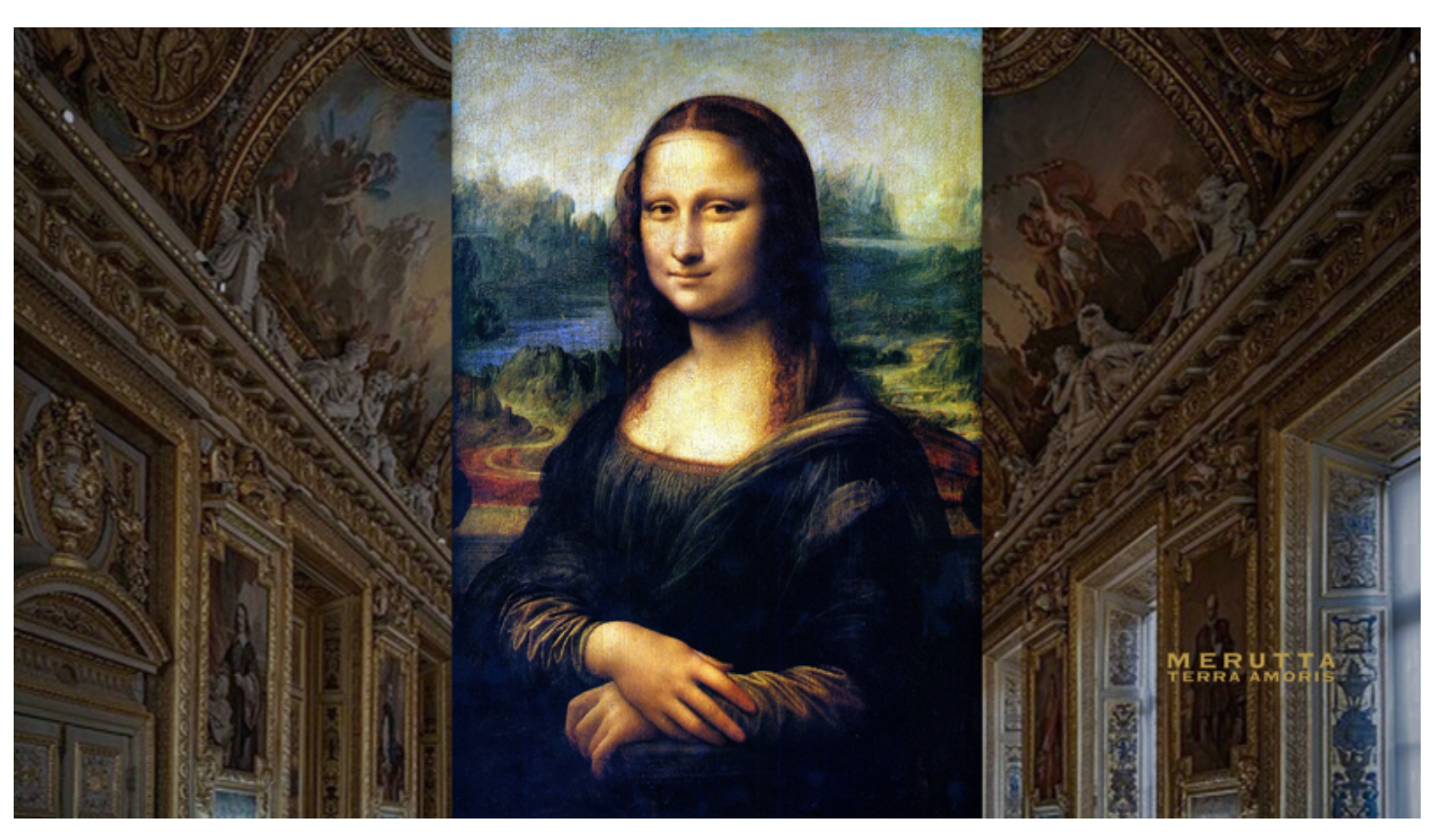
A long-term modernization project running through 2031 is also being accelerated, including a dedicated gallery for the “Mona Lisa” and comprehensive infrastructure renewal.
But even official plans acknowledge:
real change will take years.
For now, France lives with the understanding that some of its relics may be lost forever.
France Was Distracted. And Lost Its Own.
This theft is not just the story of a daring criminal act.
It is the story of systemic negligence.
A country proud of its cultural heritage failed to protect it from criminals armed only with tools and confidence that no one would stop them.
The relics disappeared not because the thieves were geniuses.
But because France spent too long believing nothing threatened its treasures.
That day, people near the Louvre’s Pyramid took photographs, bought tickets, drank coffee.
And in the Apollo Gallery, history left through a broken window.
Quietly, quickly, almost unnoticed.
And that is — the most terrifying part.
__________________________
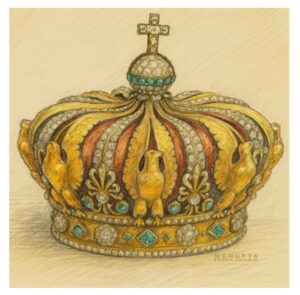
The crown stolen from the Louvre on October 19, 2025, is: The Crown of Empress Eugénie
(French: Couronne de l’Impératrice Eugénie)
It is one of the most famous crowns of the Second Empire, created for the wife of Napoleon III — Empress Eugénie de Montijo.
It is adorned with:
-
diamonds,
-
emeralds,
-
golden palmettes,
-
characteristic imperial eagles (the symbol of the Empire).
It was found lying on the floor with visible damage — it had been roughly cut with a tool as the thieves attempted to extract the stones.
MERUTTA – Independent Cultural House.
Films. Essays. Podcasts. Aesthetic intelligence:
https://merutta.com/
https://shop.merutta.com/
https://ko-fi.com/meruttamedia
https://medium.com/@MERUTTA
https://odysee.com/@merutta:a
https://rumble.com/user/Merutta_Channel