
Last updated on March 1, 2026
Le Figaro — 200 years (1826–2026)
A Parisian newspaper and the history of a French public voice
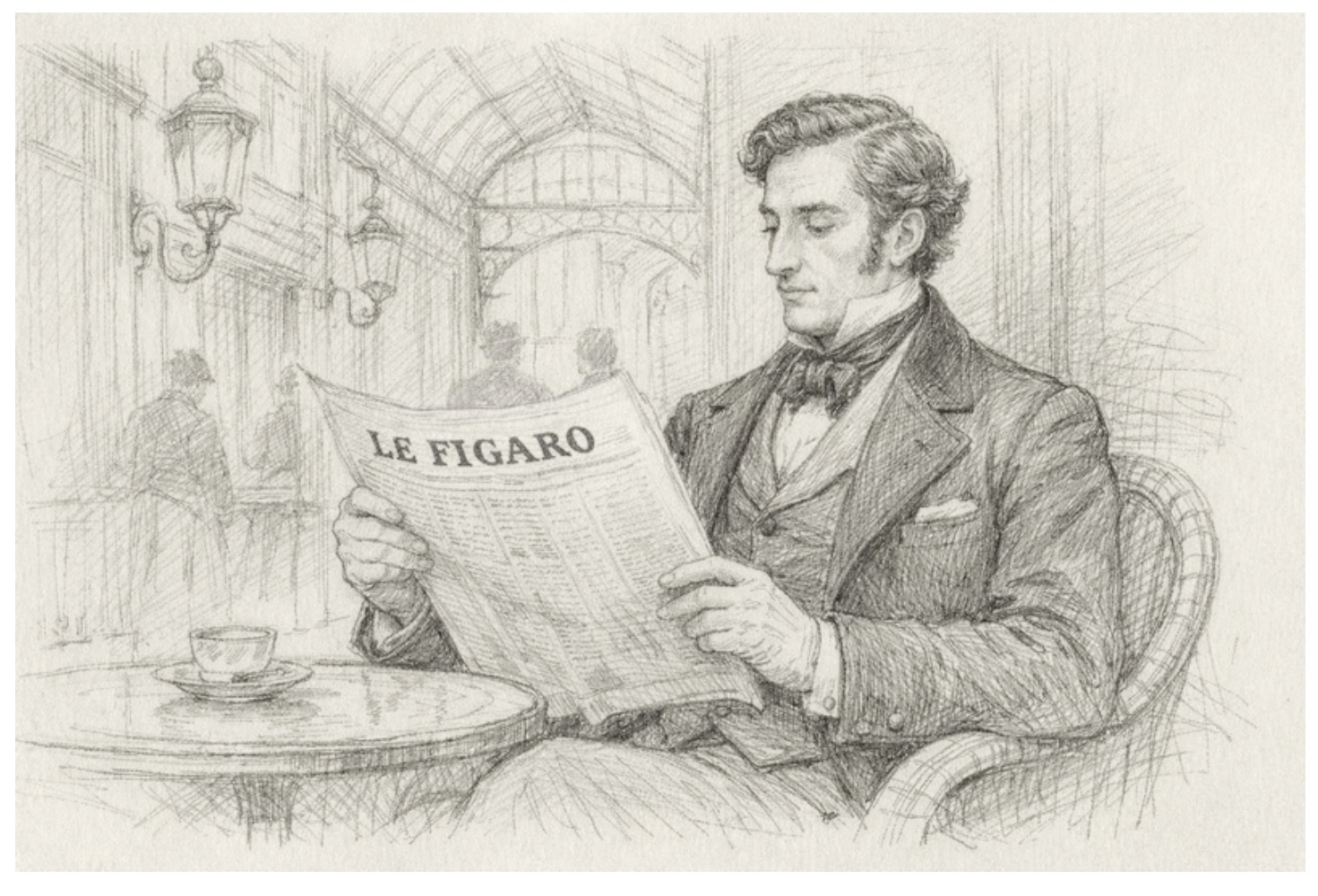
Le Figaro was founded in Paris in January 1826, during the period of the Bourbon Restoration — a time marked by political instability, censorship, and an ongoing search for new forms of public expression.
Its founder was Maurice Alhoy, a journalist and playwright closely connected to the theatrical and literary circles of the capital. He was joined in the venture by Étienne Arago, a man of letters and the theatre, and the brother of the scientist François Arago. From the outset, Le Figaro was conceived not as an official political organ, but as a satirical and literary publication, capable of addressing power, society, and public morals indirectly, sharply, and intelligently.
The choice of name was deliberate. Figaro — the character created by Pierre-Augustin Caron de Beaumarchais — embodied independence, wit, and social awareness. The newspaper adopted this stance as its own: the right to observe more than was permitted, and to articulate ideas with precision rather than conformity.
In its early decades, Le Figaro was repeatedly suspended and forced to cease publication. Changes of regime, tightening censorship, and political upheaval all directly affected its fate. The paper appeared irregularly, altered its format, disappeared, and returned.
A decisive turning point came in 1866, when Le Figaro was relaunched as a daily newspaper, gradually assuming the form in which it is known today: a publication of political and social commentary, firmly anchored in cultural and literary life.
In nineteenth-century France, Le Figaro became a place where literature felt at home. Texts by Honoré de Balzac, Gustave Flaubert, Émile Zola, and later Marcel Proust appeared in its pages. Literature was not an ornament to the newspaper; it was one of its defining principles. Style and thought were regarded as inseparable.
Throughout the twentieth century — amid wars, occupation, ideological pressure, and cultural rupture — Le Figaro maintained a position associated with the moderate centre-right, earning a reputation for analysis rather than slogans. It did not seek to be the loudest voice, but a considered one.
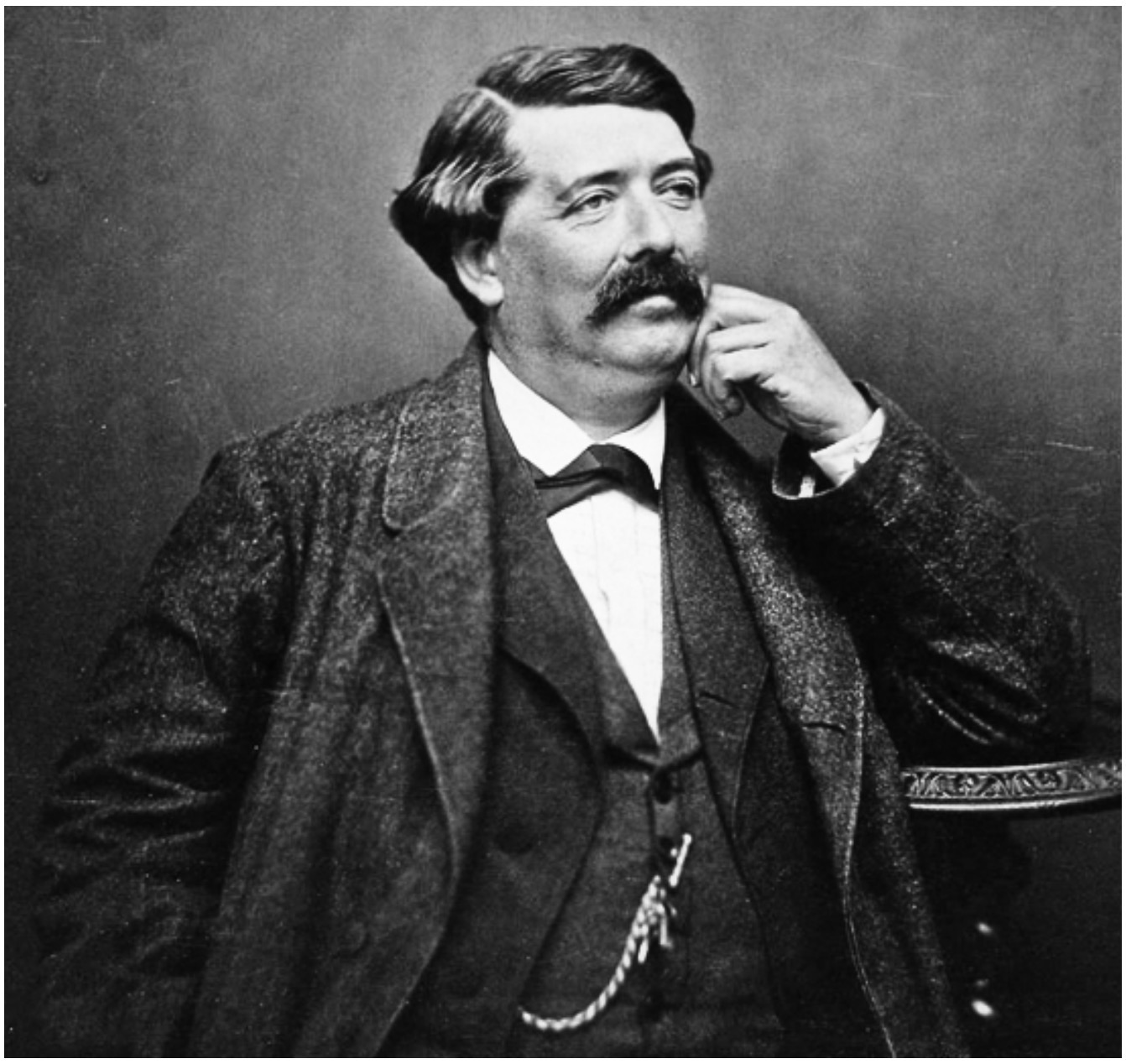
The opening was attended by representatives of France’s cultural and political circles, journalists, historians of the press, writers, and public intellectuals. The anniversary was less a celebration than a moment of historical reckoning.
The history of Le Figaro is the story of how a literary and satirical project of the nineteenth century became a lasting institution of public thought — not a myth, but a long, complex, and living history of the French written word.
Follow MERUTTA across platforms for extended analysis, video essays, and cultural briefings:
- Medium — @MERUTTA
- Instagram — @merutta.official
- TikTok — @merutta_official
- YouTube — @terraamoris