
Last updated on March 1, 2026
A criminal case involving one of France’s most iconic actors has evolved into a broader cultural reckoning. As courts, newspapers and artistic communities take opposing positions, the Depardieu affair exposes a deeper tension between justice, public judgement and the legacy of twentieth-century cinema.
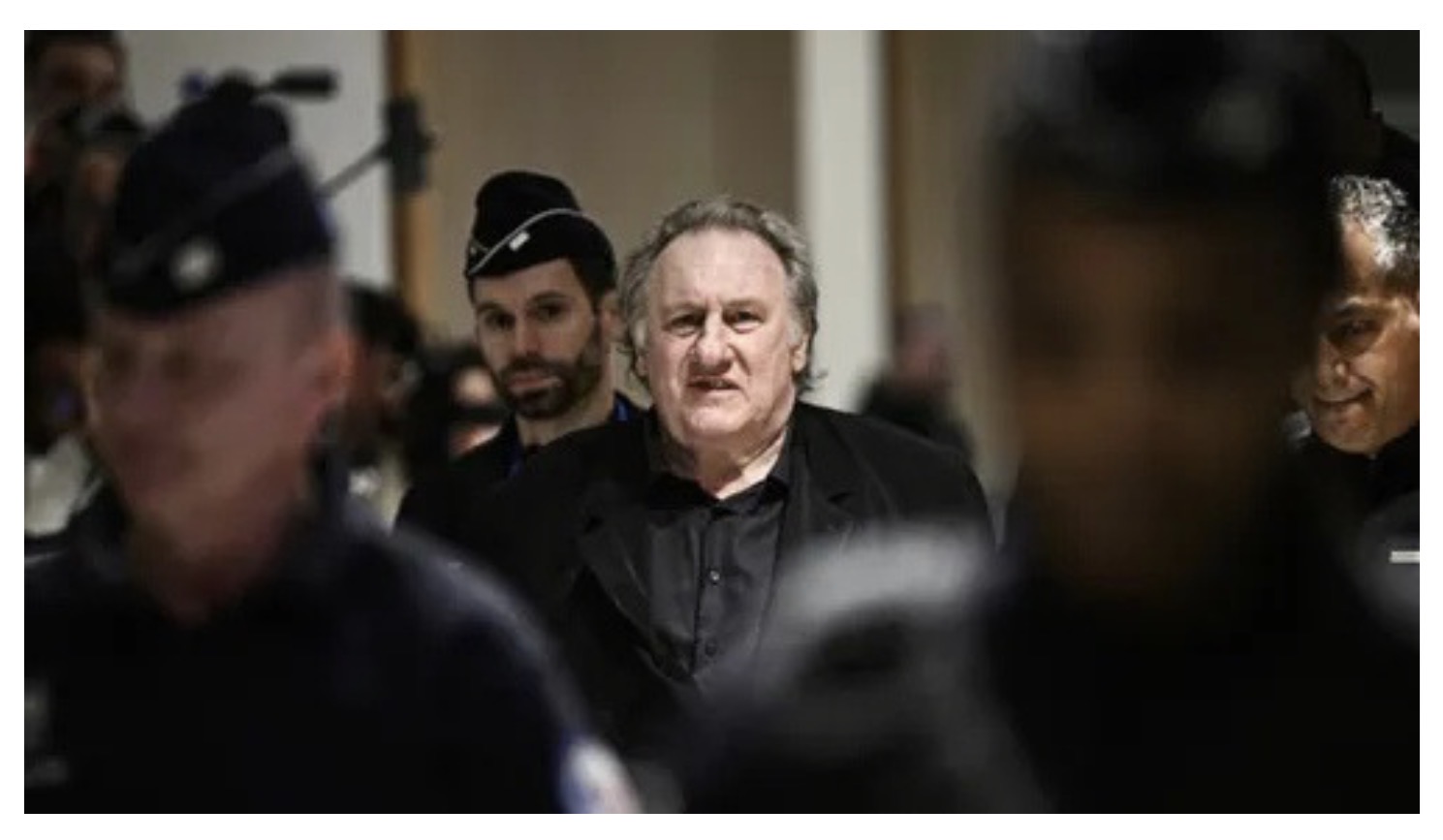
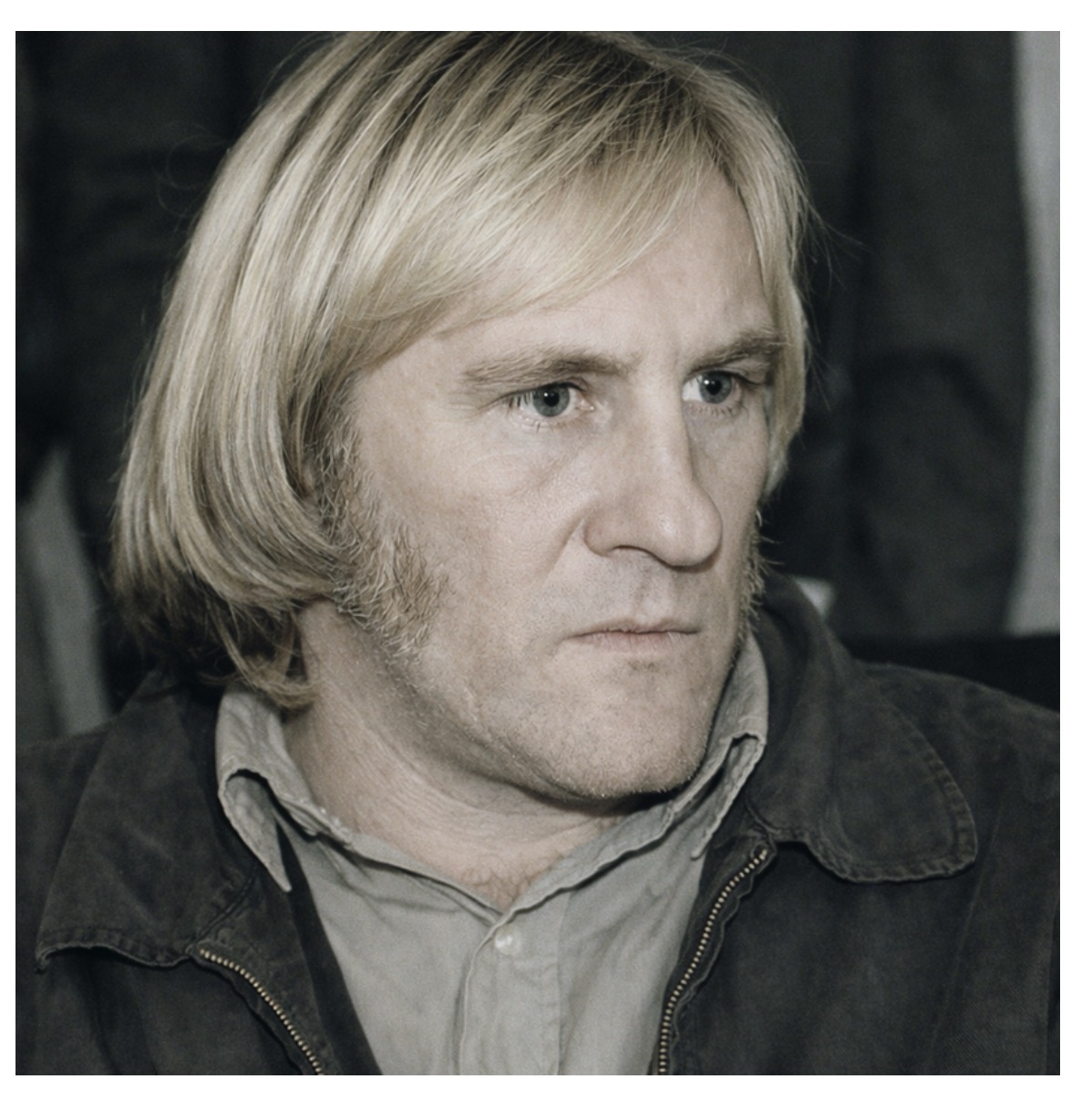
The name Gérard Depardieu has long ceased to belong solely to cinema. It exists on a different plane — as a cultural sign, a concentration of contradictions within French art of the second half of the twentieth century, a figure in whom physical presence, voice, excess and rare screen power are inseparably entwined. His presence always exceeded the boundaries of role; he did not so much play characters as embody states of an era.
Today, as the actor approaches his eighth decade, his name once again occupies the centre of public attention — no longer as a purely artistic fact, but as a nodal point of cultural conflict, where law, morality, media and memory intersect.
On 24 March 2025, a criminal trial began in France concerning allegations of sexualised violence linked to incidents on the set of the film Les Volets verts (The Green Shutters, 2021). From its earliest days, the proceedings assumed a significance far exceeding that of a private case, becoming the object of sustained media attention and a catalyst for public debate on what is permissible, impermissible, and how behavioural boundaries within cultural environments have shifted.
On 13 May 2025, a court of first instance delivered its verdict; however, the legal process has not reached a final conclusion, as the matter entered the appellate stage and certain aspects continue to be examined within the judicial framework. Depardieu has consistently denied the allegations and articulated his position publicly.
In a text published in Le Figaro, he wrote: “Never — but never — have I abused a woman… If I have been guilty of anything, it is only of being too loving, too generous, or of having too strong a temperament.” During court hearings in the spring of 2025, he also stated that he did not perceive his actions as constituting sexual violence and spoke of a growing sense of estrangement from what he described as a “new society”, whose rules he finds difficult to accept. These remarks articulate his subjective position without substituting for judicial assessment.
Alongside the trial, a rarely intense polemic unfolded within the cultural sphere itself, with two of France’s leading newspapers playing a decisive role. In December 2023, Le Figaro published an open letter in support of Depardieu. The tone of the text was one of concern: its authors warned of the danger of public lynching, of replacing judicial procedure with moral condemnation, and of the risk that an attack on one individual might evolve into an assault on the very principle of artistic freedom.
Among the public signatories were prominent figures from European cinema and culture, including Pierre Richard, Carole Bouquet, Charlotte Rampling, Gérard Darmon, Victoria Abril and Nathalie Baye, as well as Carla Bruni — singer, former model and former First Lady of France — whose participation lent the letter additional symbolic and political-cultural resonance.
Almost simultaneously, Le Monde published a counter-letter signed by other figures from European cultural life — artists, directors, musicians and writers. This text asserted that artistic stature and the significance of a career cannot serve as justification for potential abuses, and that the cultural industry itself requires more rigorous professional and ethical frameworks. Within the public sphere, a rare journalistic confrontation thus emerged: two leading national newspapers found themselves on opposing symbolic ground, reflecting not merely a divergence of opinion, but a deep fracture within French cultural consciousness itself.
For part of society, cases of this kind are perceived not only as legal proceedings, but as processes possessing an exemplary effect, shaping an atmosphere of warning. Within this logic, figures of substantial cultural weight become carriers of signals addressed to the professional community as a whole. At the same time, the concrete circumstances of events that took place beyond public view remain inaccessible to external observation. This renders any categorical conclusions — whether accusatory or exculpatory — ethically fragile, and intensifies the tension between the judiciary, the media and cultural memory.
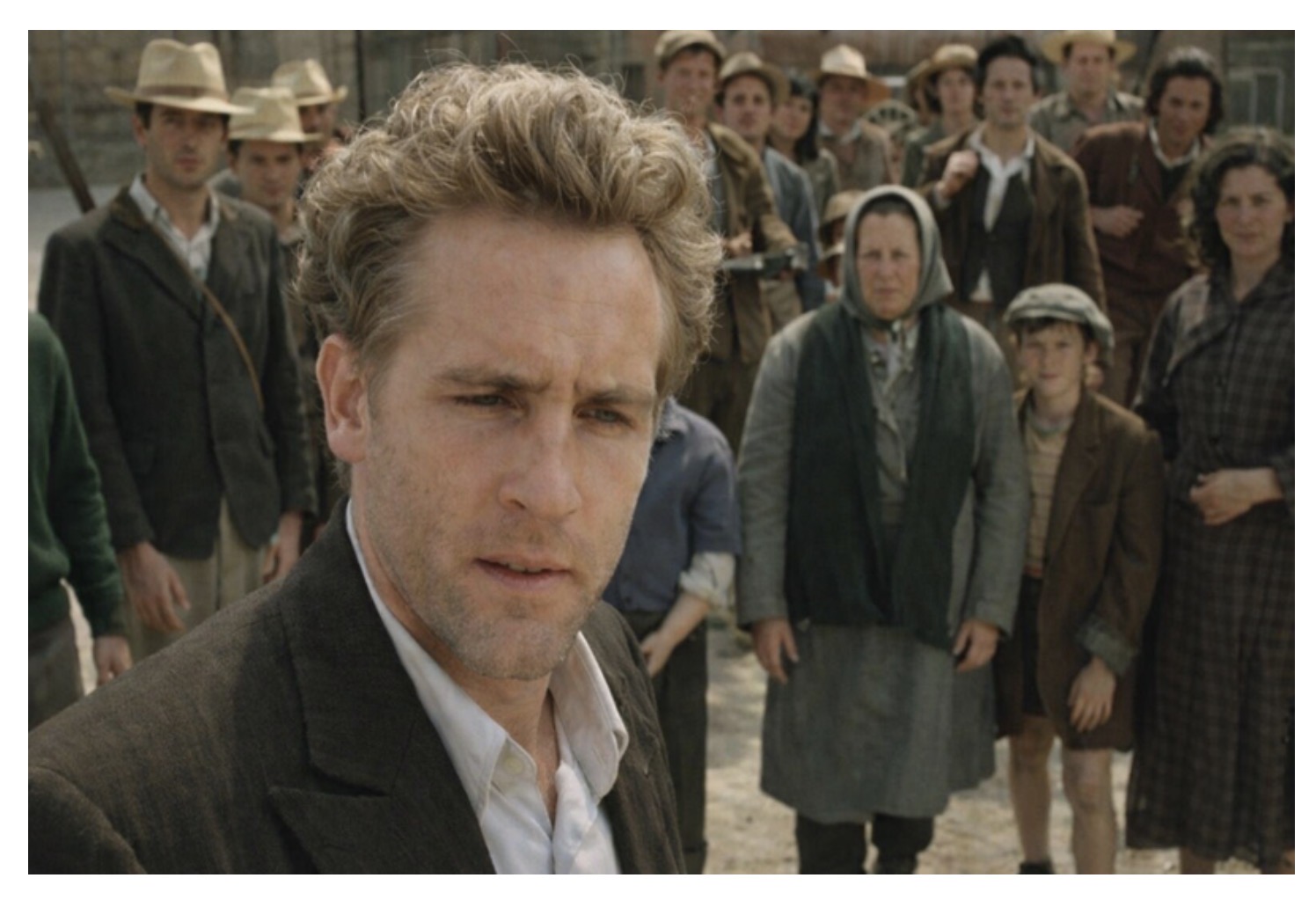
Irrespective of the outcome of legal proceedings, Gérard Depardieu’s contribution to cinema remains significant and firmly inscribed in the history of the art. He worked with directors who shaped the face of European filmmaking, including Claude Berri (Jean de Florette, Manon des Sources, 1986), Jean-Paul Rappeneau (Cyrano de Bergerac, 1990), Peter Weir (Green Card, 1990), and Roland Joffé (Vatel, 2000), a performance many continue to regard as one of the most complex and mature of his career. He also worked with Bernardo Bertolucci in the epic historical film Novecento (1976), a cornerstone of twentieth-century European political cinema. These films persist within cultural memory independently of contemporary controversy, as autonomous artistic facts.
The story of Gérard Depardieu today is not only a legal case, nor solely the biography of a single actor. It is a moment of collision between eras, in which the past of art encounters new social expectations, and culture is compelled to redefine the boundaries between memory, responsibility and law. The court has not yet delivered a final verdict. Society continues to argue. And perhaps the ability to speak of this without hysteria, without moralising, and without replacing judicial judgement with public sentencing remains one of the clearest indicators of maturity within contemporary cultural space.
Follow MERUTTA across platforms for extended analysis, video essays, and cultural briefings:
- Medium — @MERUTTA
- Instagram — @merutta.official
- TikTok — @merutta_official
- YouTube — @terraamoris