
Last updated on March 1, 2026
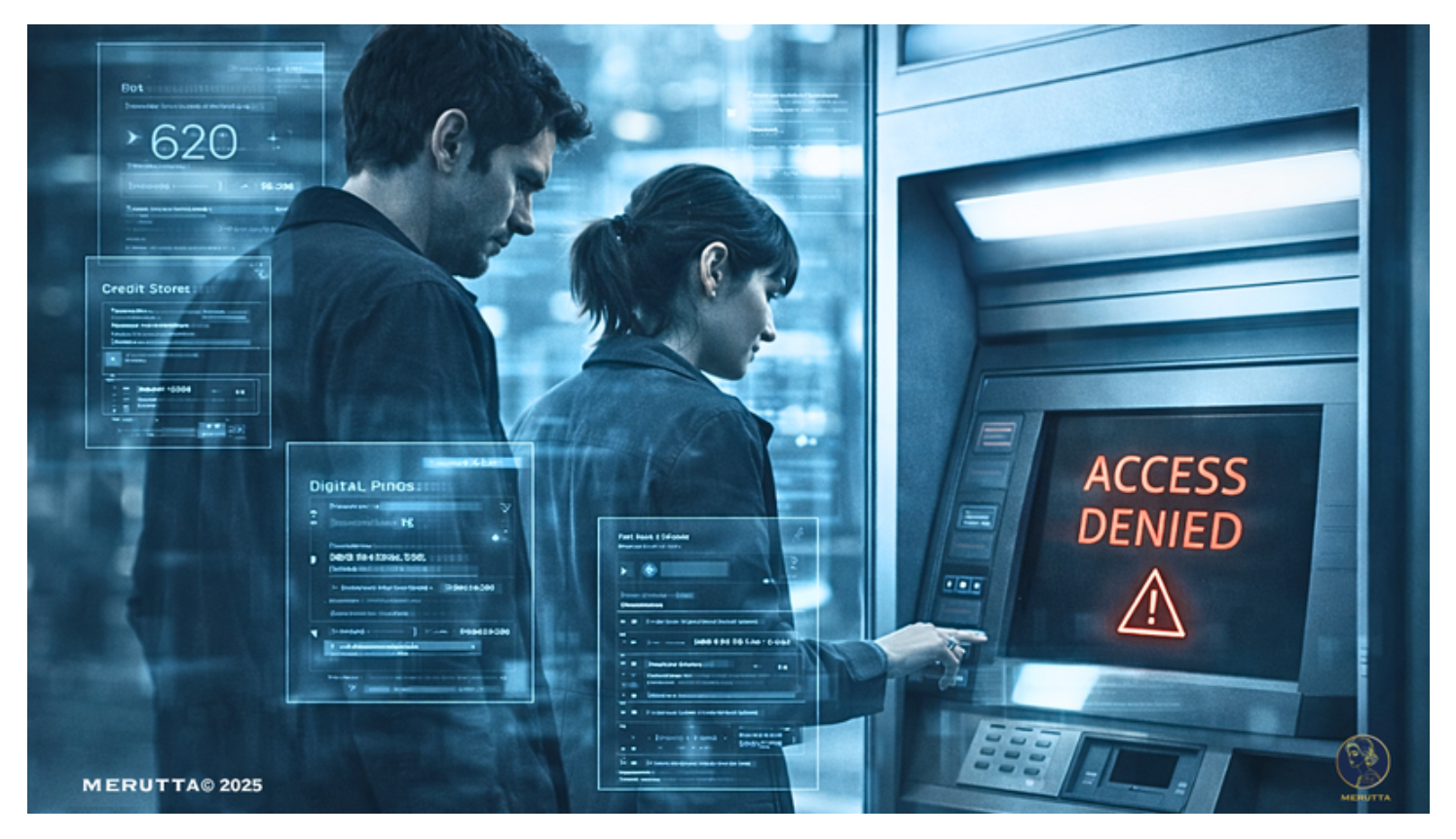 Digital Identity: The End of Privacy?
Digital identity is the totality of information about a person that exists in digital form: name, date of birth, logins and passwords, biometric data, purchase history, behavioral patterns online.
It is not the person themselves — but their machine representation, created for analysis, recognition, and control.
If you do not control your digital identity, someone else controls it.
The rapid development of artificial intelligence is changing not just technological reality — it is transforming the very ontology of human existence.
Memory, knowledge, communication, financial transactions, images, and even self-perception — everything has been moved into the digital environment.
What only recently seemed like fantasy has become ordinary.
 A person increasingly transfers cognitive functions to an external layer — to algorithms, machines, systems.
Critical thinking gives way to consumption: flickering images, short impulses, quick answers replace reflection, doubt, inner dialogue.
But this is not only about convenience or efficiency.
This is a structural shift: the individual is increasingly embedded in the digital ecosystem, losing control over their own essence.
Digital identity ceases to be a reflection of personality — it becomes its replacement.
Every action is registered, analyzed, classified.
Personal data is transferred to the system voluntarily — otherwise it is impossible to function in society.
This is how a pyramid of dependency is formed:
if you step beyond its limits — you literally fall out of life.
You lose access to information, work, communication, “normality.”
You become a social outsider.
And therefore, even if you are internally opposed,
you accept the rules of the game — because there is almost no alternative.
Life as such has been moved inside the digital construction.
Privacy is lost as a category.
Data has already been collected, archived, correlated.
And it is quite likely that in the near future
identification by eye or face will become the standard way of entering any space.
Invisible sensors, cameras, and trackers are already embedded in the surrounding environment.
Control has become seamless: it is not felt as pressure — it is felt as convenience.
Full autonomy is preserved only by a narrow layer of the technocratic elite —
those who control the system.
Everyone else exists within a predictable digital matrix that knows more about them than they know about themselves.
Today, the question is no longer about how developed technologies are.
The question is something else: has the human being retained an inner space that cannot be digitized, scanned, or subordinated to an algorithm?
What will the future be?
A fully coded life within the architecture of total control — or the revival of human inner freedom, the kind that does not submit to digital replication?
DOES YOUR INNER WORLD STILL EXIST?
MERUTTA – Independent Cultural House.
Films. Essays. Podcasts. Aesthetic intelligence:
https://merutta.com/
https://shop.merutta.com/
https://ko-fi.com/meruttamedia
https://medium.com/@MERUTTA
https://odysee.com/@merutta:a
https://rumble.com/user/Merutta_Channel