
Last updated on March 1, 2026
Alain Delon and Jean-Pierre Melville:
A Convergence of Solitudes
Cinema, silence, and the discipline of form in post-war French film
“I never explain my films. I make them.”
Jean-Pierre Melville
“Je n’explique jamais mes films. Je les fais.”
— Jean-Pierre Melville
French cinema of the second half of the twentieth century saw rare moments when the meeting of a director and a performer became not collaboration, but a form of mutual recognition. Such alliances are not made by calculation, nor do they obey the logic of career: they arise where what coincides is not ambition, but inner measures — one’s view of the world, of the human being, and of the boundaries of art.
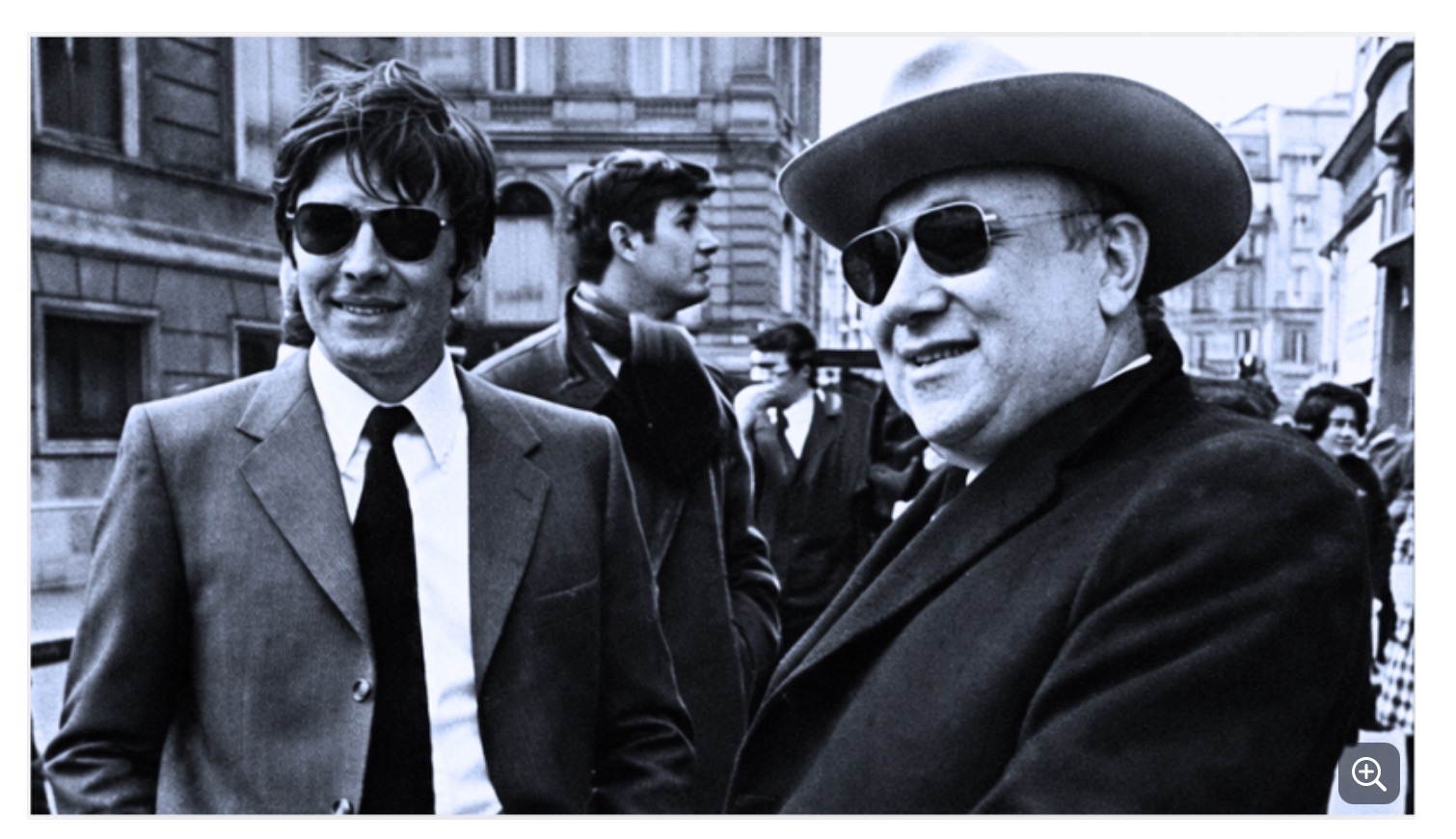
The creative alliance with Alain Delon was not a matter of chance, and still less the result of external calculation. It became a rare example of inner correspondence — a meeting of artistic temperaments founded upon mutual recognition rather than closeness or personal friendship. Delon possessed a rare, almost unique capacity to convey meaning through silence. This was not an actor’s device, nor did it belong to the realm of technique. He did not “act” — he existed within the frame. A single glance, a barely perceptible movement, the slightest turn of the head was enough to transmit a state that, in other hands, would require pages of dialogue. His face, his bearing, his inner composure spoke for hundreds of words. In this lay true art — not demonstrative, not fashioned for effect, but so supremely restrained that it became unerringly exact. For that very reason, his encounter with Melville could not have been superficial. Between them there was no ease, no friendly intimacy, no constant exchange. Their relationship cannot be called harmonious — rather, it was tense and complex. Yet within that tension there existed deep professional understanding and respect. Delon more than once observed that they spoke little: a handful of phrases was enough for each to understand the other without explanation. Their interaction took place at the level of intuition and talent — like the collision of two masses, two independent forces that do not dissolve into one another, yet form a single structure. Melville was a man of voluntary solitude, consciously withdrawing from the outside world. Delon was a man of compelled visibility, carrying his solitude within, suppressing it under the necessity to be present, to be seen, to stand as a symbol. Their alliance arose precisely at this point of intersection: in silence, in discipline, in the acceptance of solitude as an ineliminable condition. Inner solitude, lived so differently yet felt with equal sharpness, became not a theme but a condition — that through which their films acquire their form and their culmination. And so their films sound today not as stylisation or an aesthetic gesture, but as a fixed state of human existence — supremely honest and stripped of illusion.
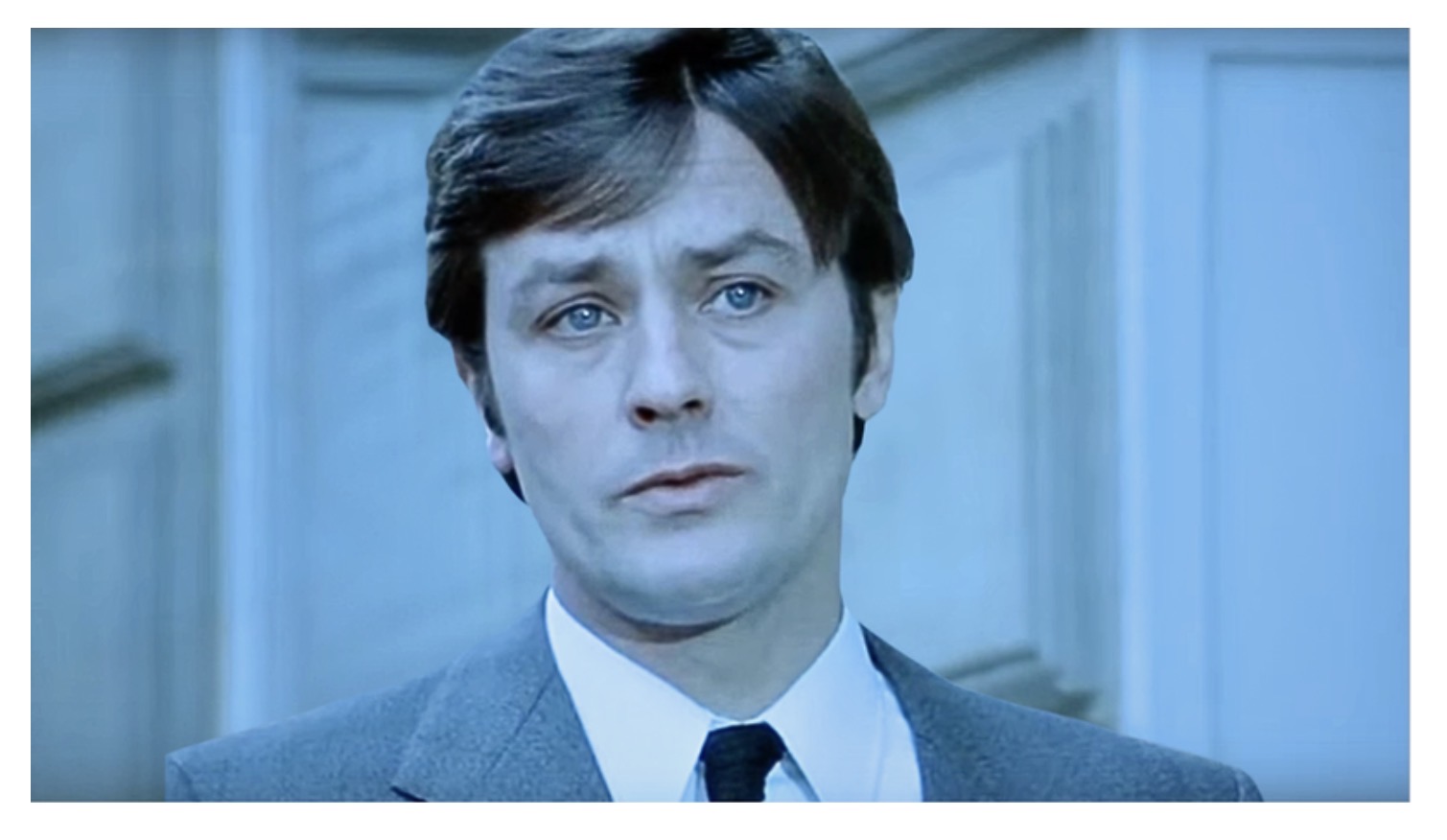
Jean-Pierre Melville: isolation as method Jean-Pierre Melville was a man of profound, almost ascetic withdrawal. Yet this withdrawal contained neither hostility nor alienation. It was not a gesture of refusal towards the world, still less an attempt to hide. Rather, it was a form of inner self-preservation: a way of holding one’s own thought intact, of preventing inner life from dispersing into social roles, obligatory gestures, and superfluous conversation. This experience permanently altered the lens through which he saw the world. War, loss, ruptures resistant to direct utterance left their mark not in biography, but in the very structure of his silence. He belonged to a generation of survivors, and survival is almost always bound to solitude. He had no family, no stable private world in which equilibrium might be restored. Work became the only possible refuge — not as escape, but as a strictly delineated space in which thought could preserve clarity and responsibility. The dark glasses, the restraint, the refusal of excessive openness were not a defence against others, but a guarding of inner concentration. Melville did not conceal his gaze — he protected the silence in which his cinema was born. He spoke little, yet looked upon the world with attentive, uncompromising intensity, selecting only what could withstand the pressure of meaning and the necessity of silence. There was no arrogance in this withdrawal. In it there was a stubborn striving for precision — towards that rare state in which a person does not lie either to himself or to the chosen language of expression. That is why his films seem at once so restrained and so human: they contain no confession, yet reveal a deep knowledge of human vulnerability; they offer no psychological explanations, yet convey a lucid understanding of how solitude, discipline, and an inner sense of honour shape the hidden relief of human existence. The loss of Melville’s autonomy — as space, as a closed world, as a completed form — did not mean the collapse of his cinematic language. On the contrary, it brought that language to an ultimate purity. His films grew ever more freed from external ties, ever more enclosed within themselves, existing as independent structures of thought. The appearance of Alain Delon within this space became the necessary response to the challenge posed by such a form — not an emotional coincidence and not a fortunate casting choice, but a conceptual decision. Delon proved to be the sole presence capable of withstanding this degree of purification: gesture without psychology, gaze without commentary, existence without explanation. Colour in Un flic is neither an expressive device nor an aesthetic choice, but an ontological condition of the world itself. The entire image is immersed in a cold, blurred blue — a colour deprived of warmth and temporal definition. It is neither night nor day, neither dusk nor dawn, but a state that follows affect and tension, in which life continues only by inertia. Blue, in Melville, is neither symbolic nor psychological: it registers a distance between the human being and the very fact of his own existence. Within this overcast, de-saturated space, human presence neither opposes the environment nor stands apart from it. Delon enters this world not as a figure, but as a state: his body, his stillness, his gaze exist at the same temperature and within the same inertial regime as the surrounding space. He introduces no psychological resistance into the frame — he coincides with a world that has already lost its inner impulse. Un flic, Melville’s final film, carries this condition to an inertial extremity. Here tension disappears, conflict recedes, resistance falls away — what remains is motion by inertia, deprived of inner impulse. Even love exists in this world as infantile inertia: the encounter occurs without surge, without expectation, as though it had taken place long before the first glance. Delon’s character lives not in action, but in its aftermath. His movements are exact, yet emptied of intention. Nothing flares, nothing insists upon its own importance. Violence does not erupt; it simply occurs. The gesture is completed, registered, and left behind, as though it concerned no one in particular. This is not coldness, nor professional composure, but a profound indifference towards oneself — a state in which life continues by habit rather than will. It is precisely within this purified space — stripped of illusion, reduced to gesture and gaze — that the alliance between Melville and Delon acquires its final meaning. For Delon this alliance proved different, yet no less defining. His path in major cinema began with Visconti — with Rocco and His Brothers, with a high tragic, almost operatic form, where human existence was lived as fate rather than as plot. This experience became the most important, defining stage of that movement — the point at which he once again encountered the high register of art and accepted it as his inner measure. Melville became the next and decisive stage: not an ascent, but a purification. Here external expressiveness disappears, psychological demonstration disappears, everything secondary disappears. Only presence remains — gesture and gaze brought to ultimate clarity. A bar after which it is no longer possible to return to superficiality without forfeiting inner honesty. This experience was neither role nor participation. It was an entry into another register of existence within the frame — a register that Delon absorbed for ever. Jean-Pierre Melville left on 2 August 1973, suddenly, at the age of fifty-five, in a restaurant in Paris, during lunch — shortly after completing work on Un flic, which became his final film: a career not interrupted, but concluded. In an era of acceleration, technological abundance, and the easy reproducibility of images, cinema of this level is now scarcely created — not because possibilities have vanished, but because the inner and outer need, the necessity to think, has faded. Melville’s cinema belongs to the golden twentieth century — a time of exceptional intellectual density, when Bergman and Alain Resnais, Visconti and Melville existed side by side; when the New Wave — with Godard — did not destroy but sharpened thought; when beside directors of such scale stood performers of the order of Simone Signoret, Jean Gabin, Jeanne Moreau, and Alain Delon. It was the post-war period of a rare concentration of talent, when art demanded effort and maturity — and answered in kind. That measure gradually recedes — not as style, not as form, but as the capacity to stop, to be filled, to accept complexity and not fear depth. That is why Melville’s cinema remains not a monument to a vanished time, but a point of departure.
“I never acted. I lived.”
Follow MERUTTA across platforms for extended analysis, video essays, and cultural briefings:
- Medium — @MERUTTA
- Instagram — @merutta.official
- TikTok — @merutta_official
- YouTube — @terraamoris