
INGMAR BERGMAN: A METAPHYSICAL MAP OF HUMAN EXISTENCE
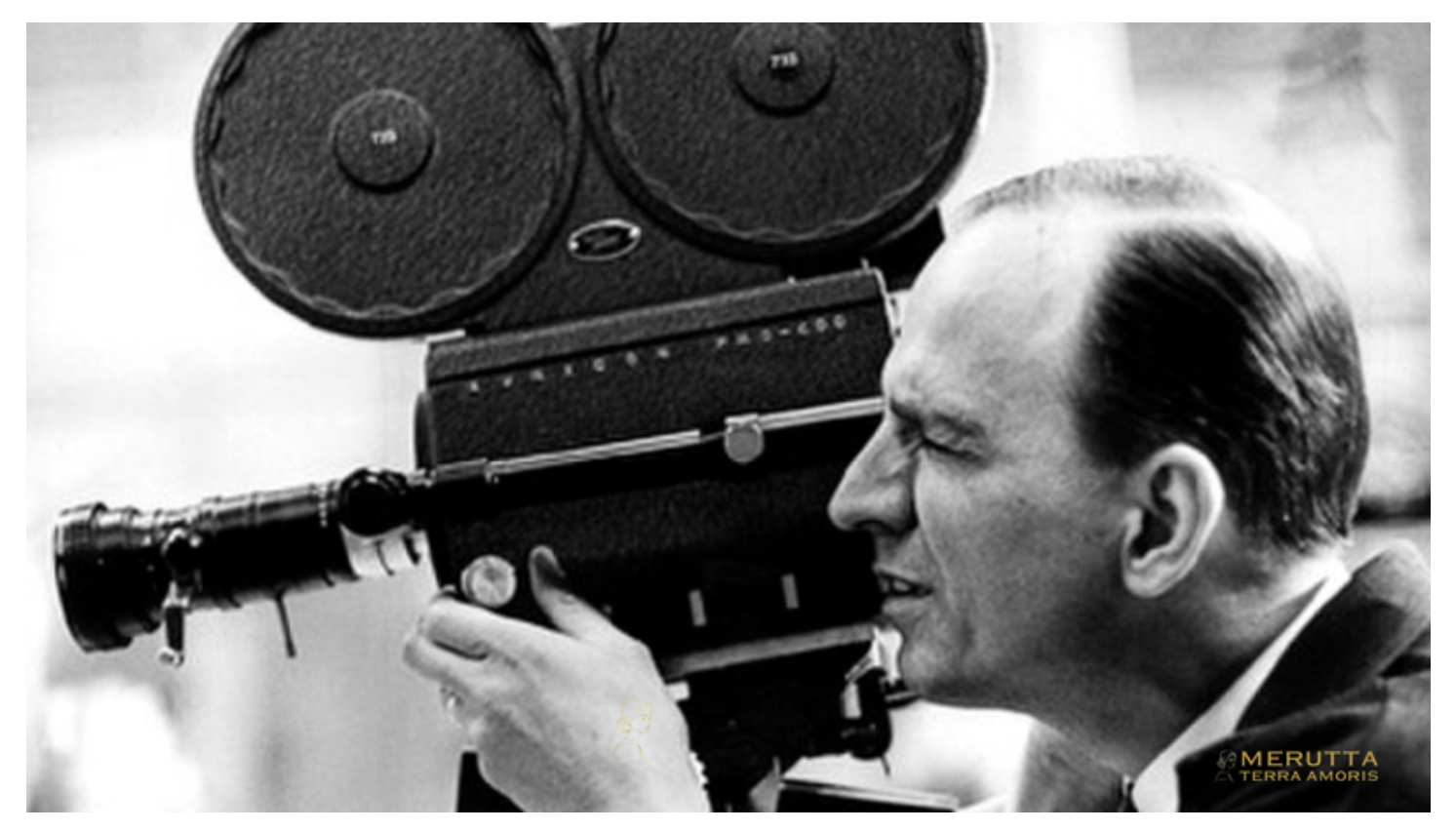
Ingmar Bergman belongs to a rare category of artists whose creative nature does not form a movement or a school, but a special dimension of human experience. In the history of cinema there are authors who change language and technique; Bergman, however, expands the very field of inner vision. He invites us to look at the human being from a space where consciousness, memory and feeling are equal in importance to external events.
To understand his art means to come closer to the way European culture in the mid-twentieth century tried to rethink its own existence after the collapse of earlier value systems. In an interview from 1960 Bergman admitted: “I have always fought with images the way others fight with words” — a declaration of the author, an exact formula of his method. He thinks with light, constructs meaning through silence, and turns the human face into the primary stage for revealing inner truth.
Unlike realist directors whose films strive to capture external circumstances, Bergman focuses on states of feeling — on that depth where the decisive movement of the soul is born. For him there is no clear boundary between inner and outer: the world becomes a reflection of a person’s condition, and any action is a continuation of an inner impulse.
To see where this optic arises from, one must recall his early years.
A childhood spent in a Lutheran household determined the emotional structure of the future director. The severity of a pastor father formed not only discipline, but also a particular sense of guilt, constant self-observation, and a tense relation to the idea of moral light. Later, in Laterna Magica, he would write: “I grew up in a world where the light of God was cold and love had to be earned.” This experience is not a domestic detail, but the fundamental matrix of his artistic world. In the films of his mature period the characters are not simply seeking meaning; they are trying to hear themselves in a space where an answer seems to be absent.
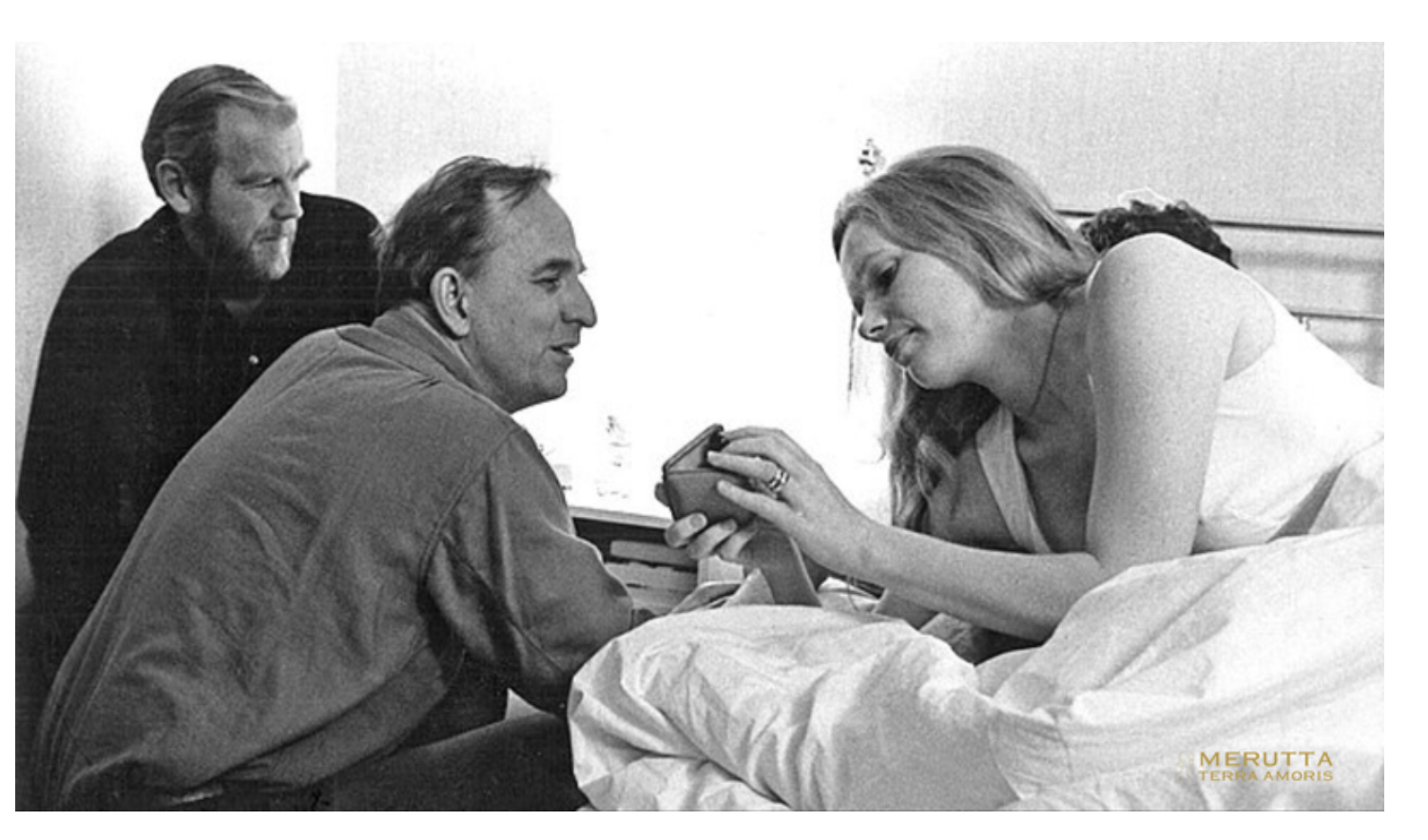
The theatre entered his life as an encounter with a different nature of human expression. There he learned to observe how the slightest movement of the face opens an entire layer of inner states. Work with actors — from Strindberg to Shakespeare — gave him the understanding that a person does not so much act as continually reveals his or her own fragility, defending it with gestures and intonations. The theatre did not present “acting” to him as a lie; it revealed human nature as a constant striving toward truth — through the mask, through the attempt to hide and at the same time to open oneself.
Post-war Europe was going through an intellectual turning point: previous systems of faith had lost their stability, humanistic ideals seemed untenable, and the human being found himself in front of a void that demanded a new language. Against this background Bergman’s cinema takes shape — not as a reaction to historical events, but as a deep investigation of spiritual vacuum. The Seventh Seal is not about the Crusades or the Middle Ages; it stretches historical time, turning it into a mirror of the twentieth century. The knight Antonius Block speaks with Death not for the sake of salvation, but for the sake of meaning. It is the dialogue of a man who has lost his footing and is still trying to preserve his dignity in the face of silence.
Bergman never aimed to explain the world rationally; he was interested in the invisible inner geography of the person. His films lack loud external events but are saturated with spiritual movement that can seem imperceptible at first glance. Inner shifts for him mean more than any catastrophe. Hence his passion for the close- up: the face becomes a destiny in miniature, a surface on which the most hidden thought emerges.
This method appears with particular clarity in Persona. From the very first frames, where the image seems to fall apart and reassemble, the film ceases to be simple narration. It becomes an act of analysis, a meeting of two human beings, each of whom reflects the other. Liv Ullmann is silent; Bibi Andersson speaks — yet their dialogue takes place not in words, but in the tense space between two worlds. In one of the key moments their faces, as if obeying an inner law, merge into a single image, affirming the idea that human identity is never stable and always exists in a state of fracture.
This idea permeates almost all of Bergman’s films. He regards the human being as a creature that has lost external supports and is forced to seek an answer within. His characters are not afraid of the world — they are afraid of their own depth. In this lies the tragedy of his cinema, but from here arises also hope: the inner world, however difficult it may be, remains a space of truth.
Reflecting on the nature of the human person, Bergman turns not to abstract philosophy but to the bodily, living presence of the actor. His cinema is unthinkable without those faces that became an extension of his inner language. In collaboration with Bibi Andersson, Liv Ullmann, Harriet Andersson, Ingrid Thulin, Gunnar Björnstrand and Max von Sydow he found that form of expression which made his films not only intellectual, but filled with rare emotional precision. Each of these names is a universe in itself, and together they form a space in which the director seeks truth without resorting to external effects.
Liv Ullmann recalled: “Ingmar was not interested in what I said. He was interested in what happened in my silence.” This thought marks one of the main features of his direction: Bergman could see meaning where, for others, a pause began. He did not “create roles” — he revealed human nature. Harriet Andersson said of him: “His gaze produced the feeling that he sees what I myself do not dare to acknowledge in me.”
It is no coincidence that critics often compared him to Antonioni. But if Antonioni returns the human being to the emptiness of the external world, where space becomes an expression of alienation, Bergman localizes the same emptiness inside the person, turning interior, face and gesture into a metaphysical stage. If architecture for Antonioni is the image of solitude, for Bergman that image becomes skin. His authorial style is closer to Dostoevsky than to Italian modernism: the inner abyss is more important than the external environment.
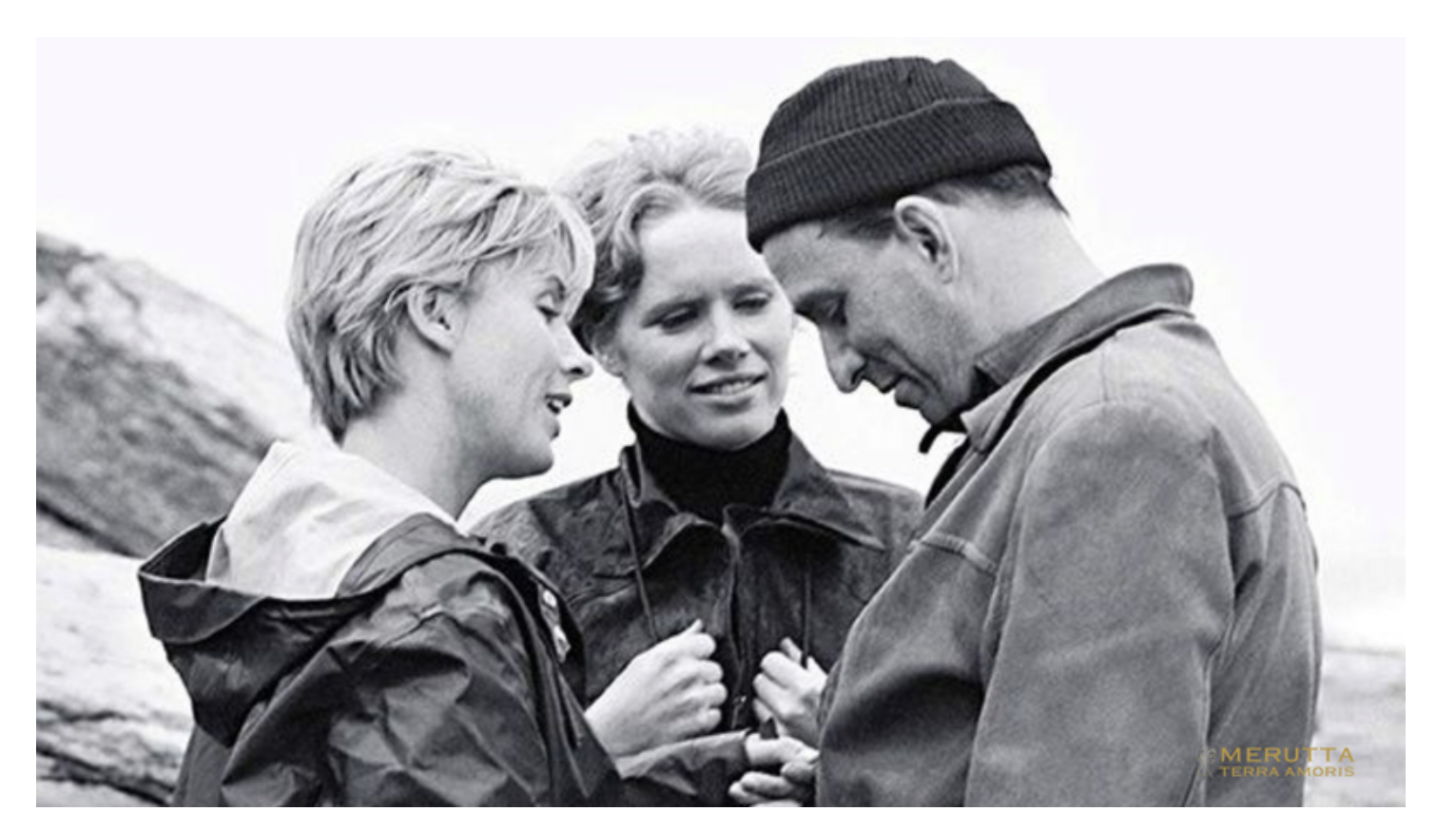
Among those who defined the visual element of his films, a special place belongs to the cinematographer Sven Nykvist; Bergman owes his most piercing images to this master of light. Nykvist could work with the face as painters of the Renaissance worked with the golden section. “With Ingmar, light became a language of the soul,” he said. Their collaboration influenced even those who worked in a different tradition: Wim Wenders considered Cries and Whispers an ideal example of how a cameraman turns light into a philosophical statement.
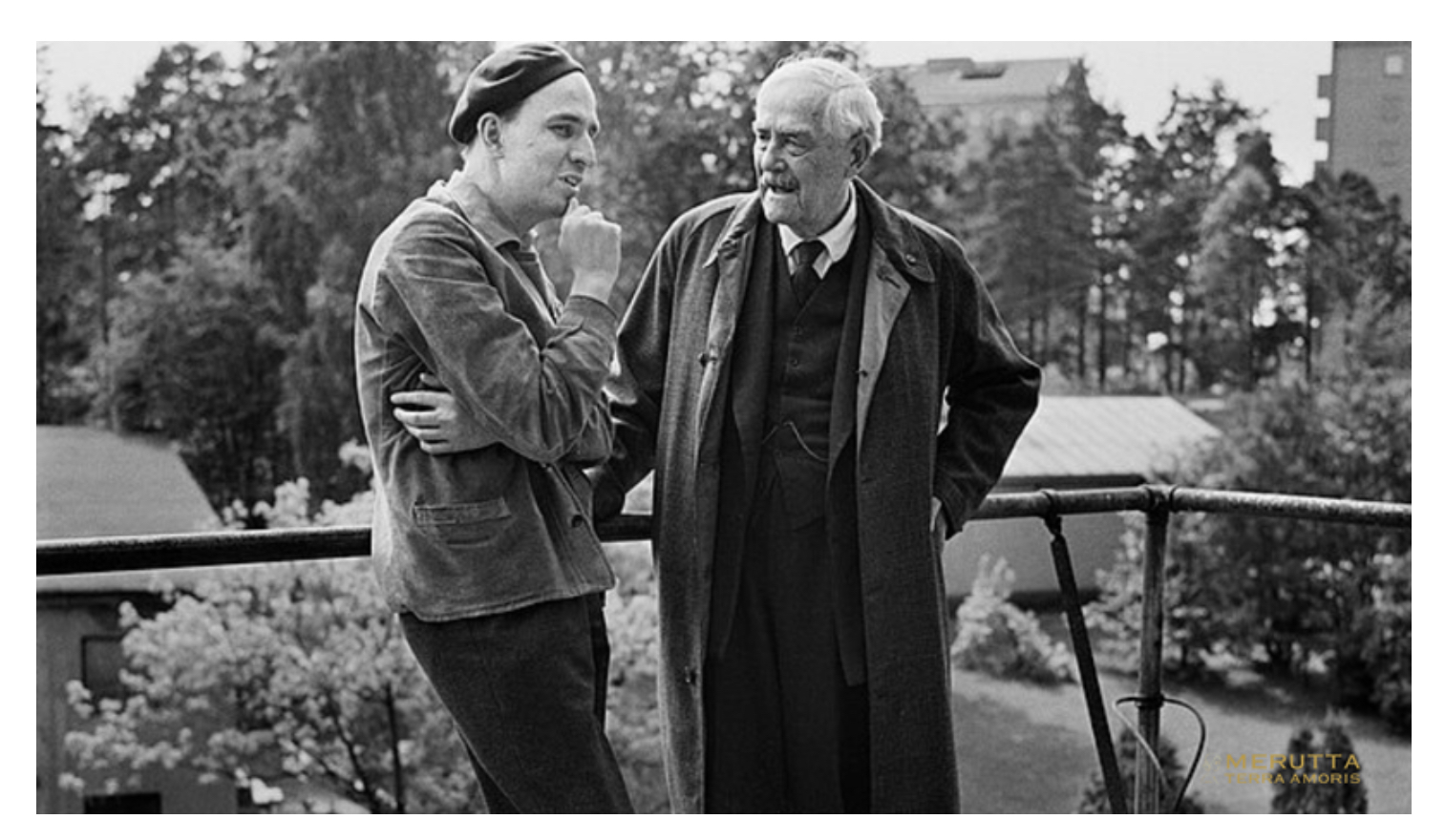
And yet the inner darkness that Bergman explored was not a plunge into despair. It was an attempt to mark the boundaries of human freedom. He said: “I only try to understand what it is that makes us human.” In Wild Strawberries the elderly Professor Borg (played by Victor Sjöström) sinks into a sequence of memories where memory is not a set of facts. It is the fabric of personality, quivering like breath. Sjöström was more than just an actor: Bergman regarded him as one of his spiritual mentors. His respect for Sjöström was so great that he placed him at the centre of a film that became at once a meditation on old age and a gesture of gratitude toward the Swedish cinematic tradition.
If one seeks cultural parallels, the most accurate will be those that link Bergman with Kierkegaard and Tarkovsky. From the former he inherits anxiety, from the latter — the striving for metaphysical truth. But there is an essential difference between them: Tarkovsky expands space, whereas Bergman narrows it. Tarkovsky explores the path of the soul through images of nature, the stillness of water, the movement of air; Bergman works with the same metaphysical categories, but within the limits of the human face. He does not allow the soul to go outward; he forces it to speak from within. Hence the unique density of his frames, in which everything external is reduced to a minimum.
Comparing Bergman to Fellini, German film critic Hans-Joachim Schlegel wrote: “Fellini opens the possibility of dreaming to a person; Bergman forces him to remember.” And indeed, if Fellini lays reality out into masks and carnivals, Bergman slowly removes the mask until only the living, vulnerable core of personality remains.
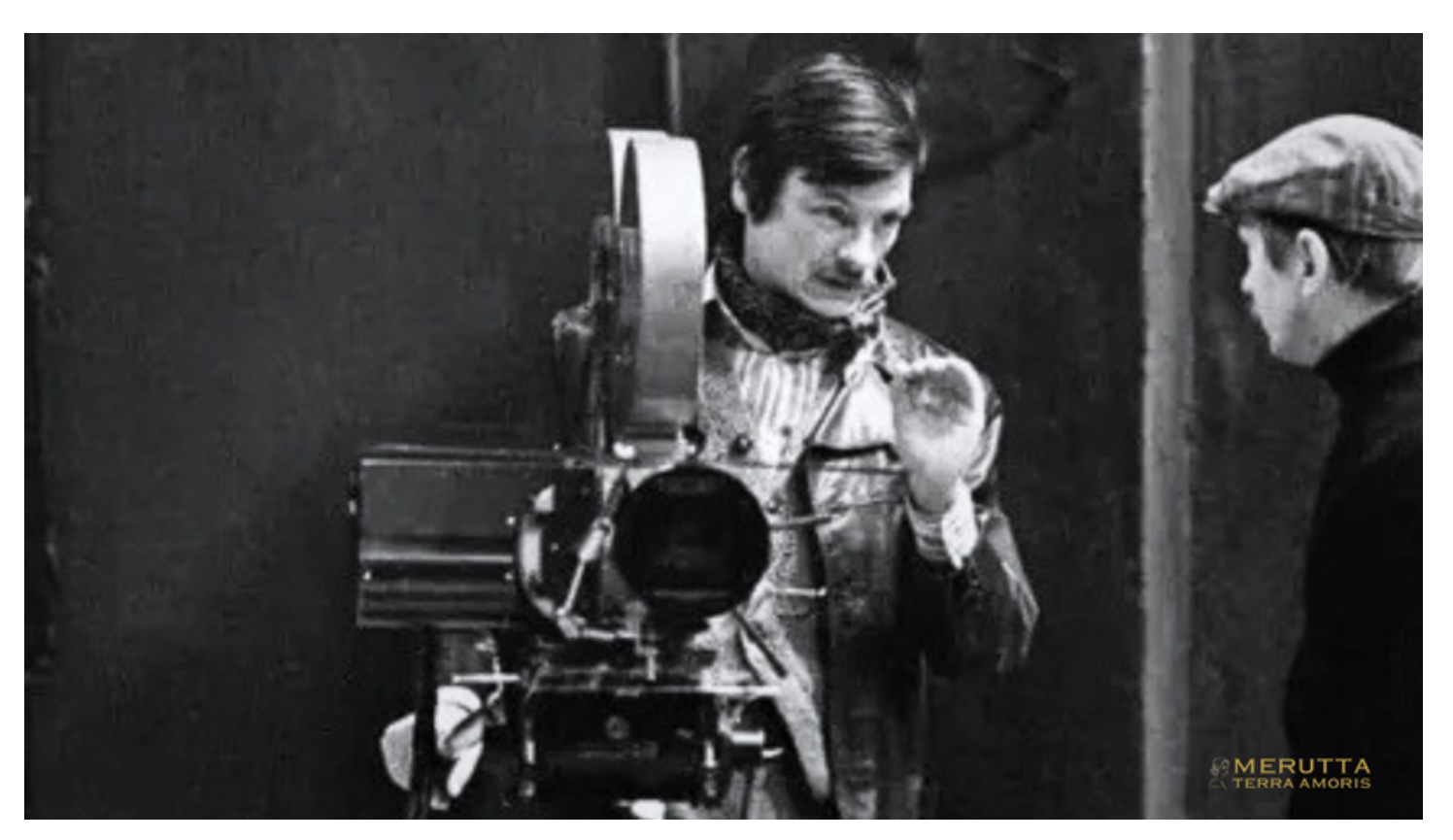
His women are not “characters”, but archetypes of inner experience. Ullmann, Andersson, Thulin — they existed on screen not as parts of the plot, but as independent psychological elements. Here a parallel with Chekhov is appropriate: his characters do not “play roles”; they reveal the essence of their own pain. In
Bergman’s work the actress becomes not an image but a voice of inner emptiness, inner search, inner light. That is why his female figures so deeply influenced European cinema of the 1970s and 1980s, forming a new type of dramatic gesture — a gesture in which outward movement is minimized and inner work reaches maximum intensity.
His work cannot be separated from philosophy. Kierkegaard’s category of despair, Nietzsche’s destruction of illusions, Freud’s idea of the repressed — all this passes through his films, not as a system but as the natural language of human existence. Through a Glass Darkly is built around the question of what a person sees when reality begins to fall apart. The Silence shows a space where words have ceased to be instruments of understanding and only bodily reactions remain. Hour of the Wolf demonstrates how fear can take shape in a form that cannot be called either objective or subjective. In each of these films Bergman explores not plots, but states.
One of the deep peculiarities of Bergman lies in his ability to turn cinema into a form of spiritual experience. For him cinema is not an illustration of ideas; it becomes a process of inner insight. This is why his films are often called a “cinema of revelation”. Here it is impossible not to recall the words of Jean-Luc Godard, who, reflecting on the nature of art, claimed: “Cinema is truth twenty- four times per second.” Applied to Bergman, this remark sounds almost literally accurate. He sought not to create fiction but to catch that truth which is born at the moment of contact between the camera and the human soul.
In dialogue with the European tradition he occupies a place distinct both from Italian neorealism and from the French New Wave. The neorealists, from De Sica to Rossellini, sought truth in the social context, in the material conditions of everyday life. Bergman shifts this search inside the person. Truffaut, Godard and Rohmer broke the language of cinema, turning it into an intellectual game and destroying previous narrative forms; Bergman, on the contrary, returns narration to the sphere of primary human drama. His innovation lies not in form, but in depth — and for that reason his films continue to live where many experimental tendencies have long since become part of museum history.
The structure of his dramaturgy is built around inner knots of personality — pain, repressed desire, fear of solitude, the search for God, the inability to love. Yet these themes do not turn into abstract philosophical theses. They acquire flesh through his actors — above all Liv Ullmann, who became the centre of his later work. Ullmann is not just Bergman’s actress; she is his mirror surface in which all the energies he tried to grasp are reflected. It is not by chance that Francis Ford Coppola said: “Liv Ullmann is the silence in which Bergman’s breathing can be heard.”
Her work in Cries and Whispers, Autumn Sonata and Persona is not the performance of a role but an act of revealing human vulnerability. There is not a single superfluous movement in these films; every glance, every pause becomes a phenomenon of psychological precision. Critic Susan Sontag asserted that Bergman created “a new anthropology of the twentieth-century human being”, in which the actor becomes not an image but a laboratory of inner experience. This thought is especially evident in Persona, where the boundaries between two women begin to blur until individual form is completely lost. At a certain moment we no longer understand where Elisabet is and where Alma is — and in this disappearance of difference the true essence of their pain reveals itself.
Equally important is the contribution of Max von Sydow, the actor who embodied on screen Bergman’s image of a person facing the inevitable. In The Seventh Seal his Antonius Block plays chess with Death — a symbolic gesture that has become one of the key metaphors of European cinema in the twentieth century. Yet even here von Sydow appears not as the bearer of an allegory, but as a human being trying to grasp what it means to be alive when only a moment is given to you. Bergman himself wrote: “I do not make films about death. I make films about the fear of living without an answer.” In this lies the fundamental difference between his films and religious tradition, which sees in death a moment of passage. For Bergman there is no passage — there is only the human effort to understand the meaning of one’s existence.
If we look for correspondences beyond cinema, Bergman is closest to Proust and Camus. Like Proust, he builds his films around the mechanics of memory, which does not obey linear time. Like Camus, he places before the human being the question of his position in an absurd world. But whereas Camus seeks dignity in this world, Bergman seeks compassion. His heroes are neither fighters nor rebels. They do not attack the absurd; they try to live through it while preserving a human face. This is why his cinema possesses a remarkable capacity to remain contemporary: it speaks of the fact that the person remains fragile even in an age of technology and global processes.
A special place in this context belongs to Fanny and Alexander, the film many regard as his spiritual testament. Here all elements of his aesthetics converge: theatre, family, memory, fear, faith, play, the child’s perception of the world, the tragedy of the suppression of personality, the striving for beauty as ultimate refuge. It is not merely a film but the sum of his life. It is no coincidence that Olivier Assayas wrote: “Every director wants to make his own Fanny and Alexander, but only Bergman was able to make it from the inside.” One can say that late Bergman is a director who, having lived through all his doubts, turns to the viewer not to explain the world, but to share that knowledge which cannot be put into words. He said: “I do not work with thoughts. I work with sensations that have no name.” In this lies his greatness. And in this lies his influence on subsequent cinema — from Lars von Trier to Michael Haneke. Von Trier inherited from him a propensity for cruel openness, Haneke — for moral anxiety, Woody Allen — for the intellectual play between philosophy and psychotherapy.
But no one has inherited his inner music. It was the music of solitude, addressed to the human being who seeks meaning in his own vulnerability. That is why Bergman remains one of those artists whose films do not age. They belong not to an epoch but to the human soul.
Today, when the age of digital imagery erases the boundaries of human experience and turns the viewer into a consumer of instant reactions, the legacy of Ingmar Bergman is perceived not merely as the history of cinema. It lives as a rare phenomenon of Europe’s cultural conscience — a reminder that art is possible only where a person preserves the capacity for inner effort. In this sense Bergman is closer to the European philosophical tradition than to the film industry: he does not work with entertainment but with the questions that define culture itself.
Bergman is often called “the last existentialist of cinema”, and there is a certain truth in this definition, but it is too narrow. Existentialism presupposes tension between the person and the world; in Bergman there is above all tension between the person and himself. His characters do not seek an external meaning; they strive to live through their own inner truth, however painful it may be. This is why his films remain alive even in the twenty-first century, when many aesthetic schools of the past have finally turned into museum exhibits.
Bergman survived this process not because of form, but because of depth. He created art that cannot become obsolete, because it addresses that which does not fall under the power of time: fear, love, solitude, contact with the divine, rupture with oneself. His legacy is not a set of devices that can be quoted or parodied. It is a way of seeing the human being without the usual defenses. This is the reason why directors of such different aesthetics continue to turn to Bergman as to a primary source.
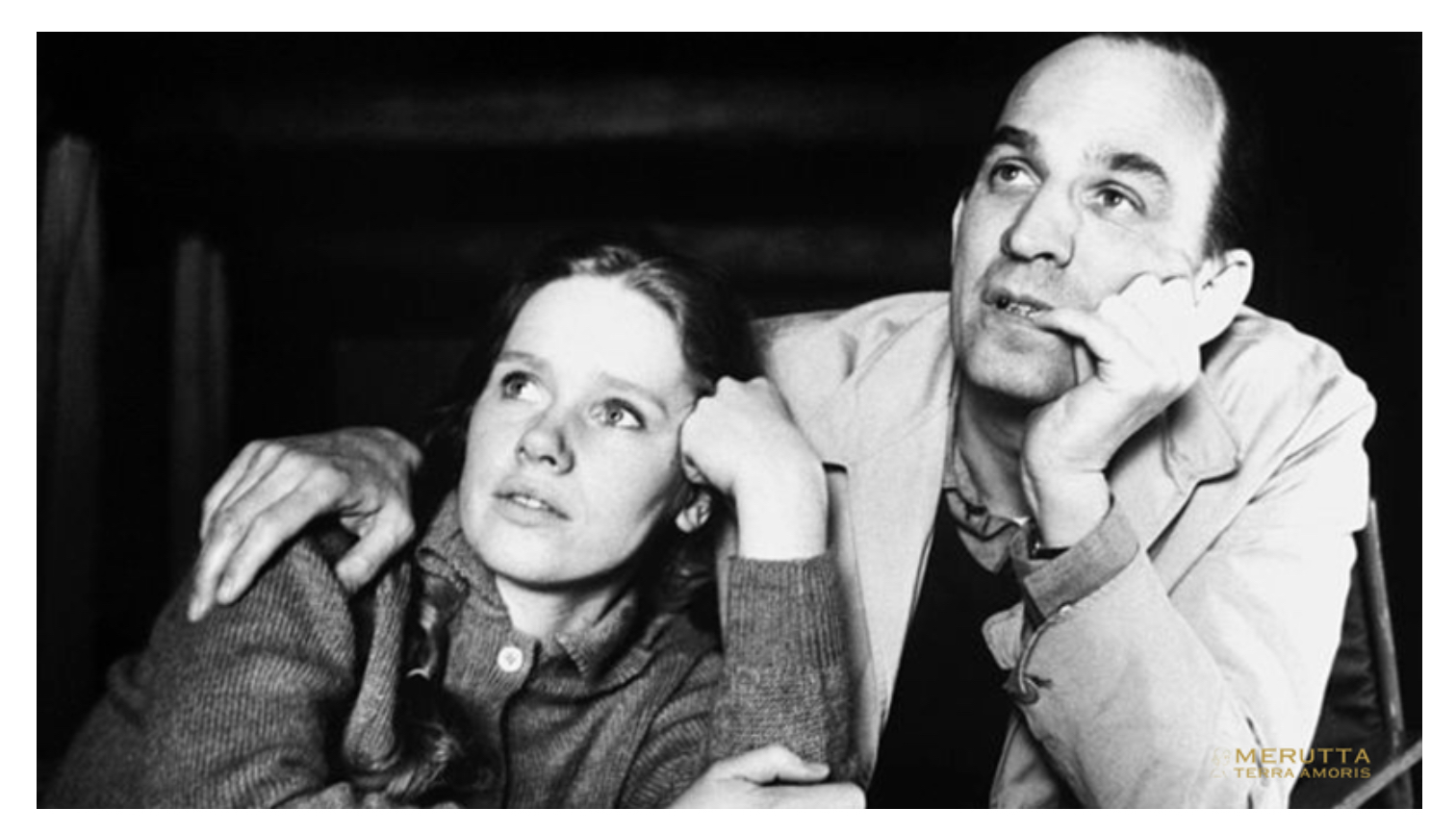
Bergman’s influence on European cinema is as far-reaching as Strindberg’s influence on theatre or Kierkegaard’s on philosophy. His language has become a kind of code for those who seek to unite psychological precision with spiritual depth. It is no coincidence that Andrzej Wajda asserted that Bergman “managed to show the torn condition of the European soul as no dramatist of the twentieth century did.” Lars von Trier — different in temperament, more cruel, more provocative — openly admitted that “Bergman will have to be rethought for many decades to come.” In Michael Haneke’s work, despite the coldness and analytical nature of his style, there lives the same anxiety before human fragility that we find in Bergman. Perhaps, however, more important than his influence on particular schools and names is the fact that Bergman returned to European cinema a sense of seriousness. He opposed the illusion that art can be separated from responsibility. He believed that a director does not merely show a story — he enters into dialogue with the memory of a generation. In one interview he said: “I do not know what the meaning of life is, but I know that I am obliged to remain honest with those who watch my films.” In this formula lies the essence of his relation to creation.
After his death many critics attempted to define his place in history. Some called him “the most religious atheist in Europe”, others — “the chief psychologist of cinema”. Perhaps Liv Ullmann expressed it most accurately: “He was a man who listened to silence.” This astonishing, almost musical characterization explains why his films still affect the viewer with the force of revelation. In each frame one hears that silence — not emptiness, but a space in which a person can hear himself.
Today his legacy continues to live not only in cinema. In numerous European theatres, Bergman’s interpretations of Strindberg and Ibsen are staged; young directors learn from him the art of the pause, the close-up, unbearable emotional honesty. His work on the island of Fårö has turned into a metaphor: the refuge of an artist who seeks not fame but clarity.
And in this lies the final secret of his legacy. Bergman belongs to Europe not as a school or movement. He belongs to it as a thinker who managed to turn cinema into a space of human truth. His films are not an attempt to explain the world, but an attempt to withstand it. And as long as there exists a person who asks questions about the meaning of life, about love, about God, about his own vulnerability, Bergman will remain contemporary.
He enters the pantheon of those rare artists whose works do not age because they are addressed to the very nature of human existence. Like Proust in literature, Mahler in music and Camus in philosophy, Bergman remains one of those who taught Europe to speak about itself honestly. And perhaps this is precisely why his cinema does not disappear. It continues to be part of collective memory — as an act of trust in the viewer, as an invitation to inner dialogue, as a form of spiritual responsibility.
MERUTTA – Independent Cultural House.
Films. Essays. Podcasts. Aesthetic intelligence:
https://merutta.com/
https://shop.merutta.com/
https://ko-fi.com/meruttamedia
https://medium.com/@MERUTTA
https://odysee.com/@merutta:a
https://rumble.com/user/Merutta_Channel